

10 years’ of mail orders, hundreds of parcels sent around the globe. Thanks to our experience, we can insure—at our own risk—the delivery of each object to your chosen address.
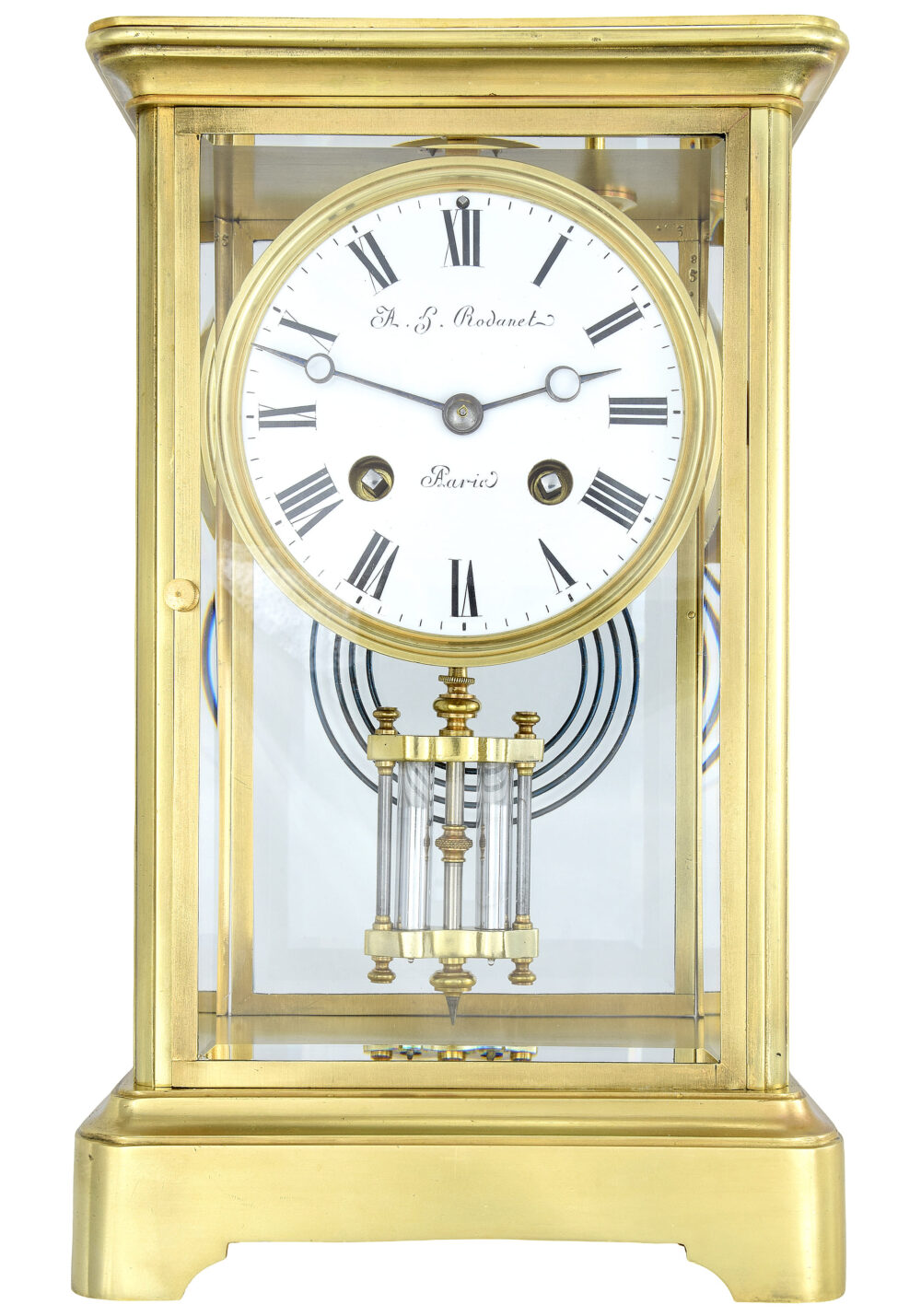
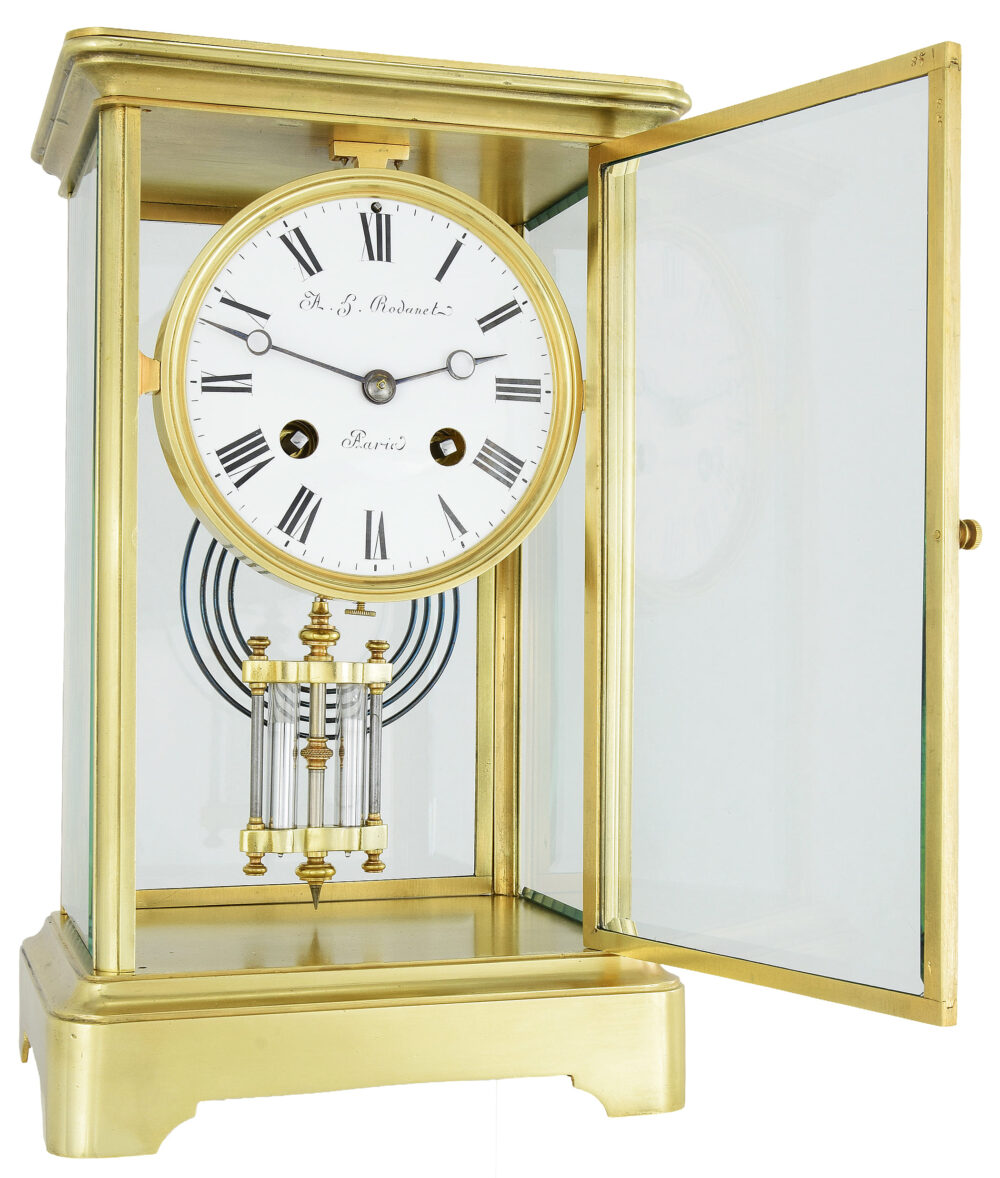
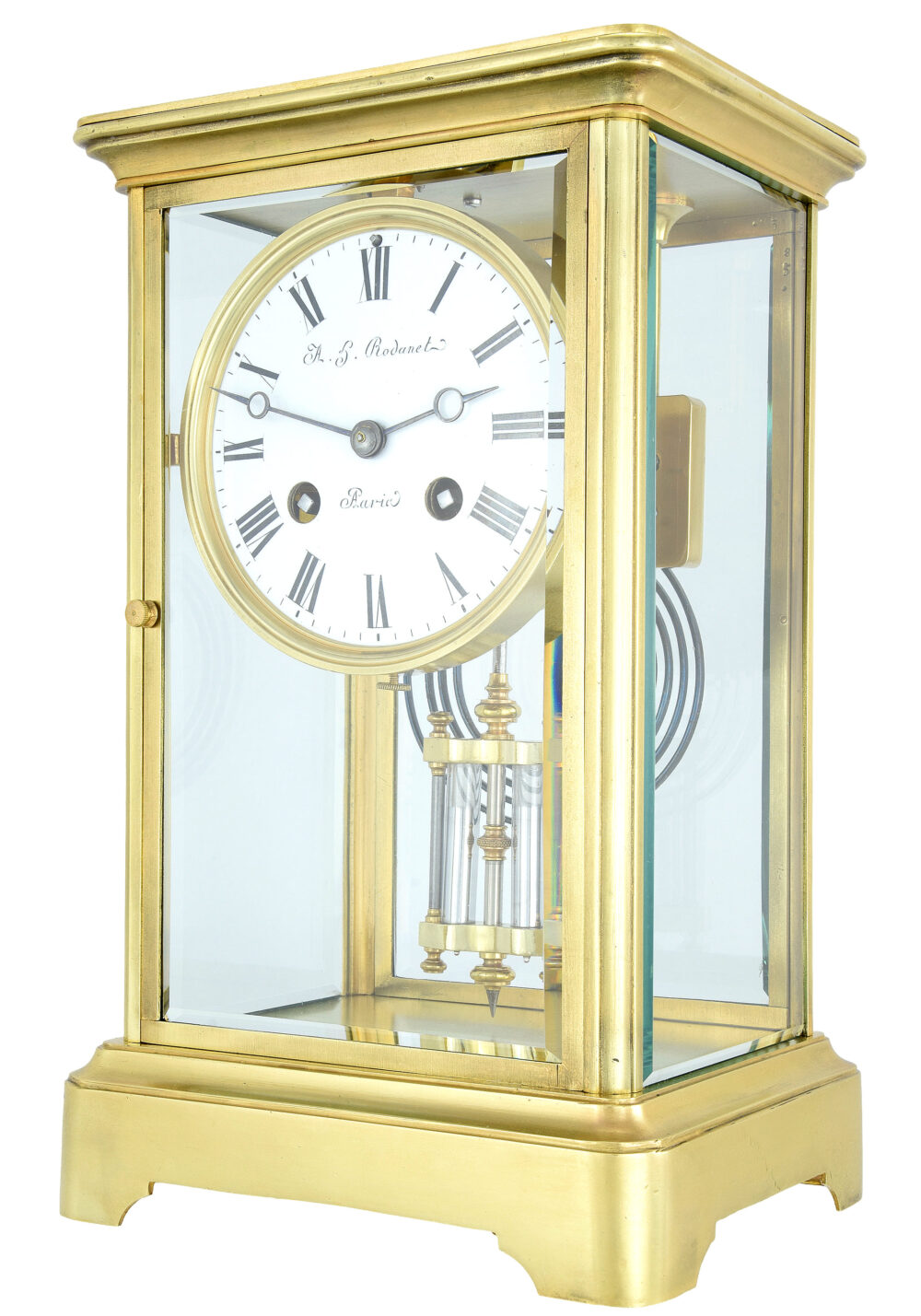
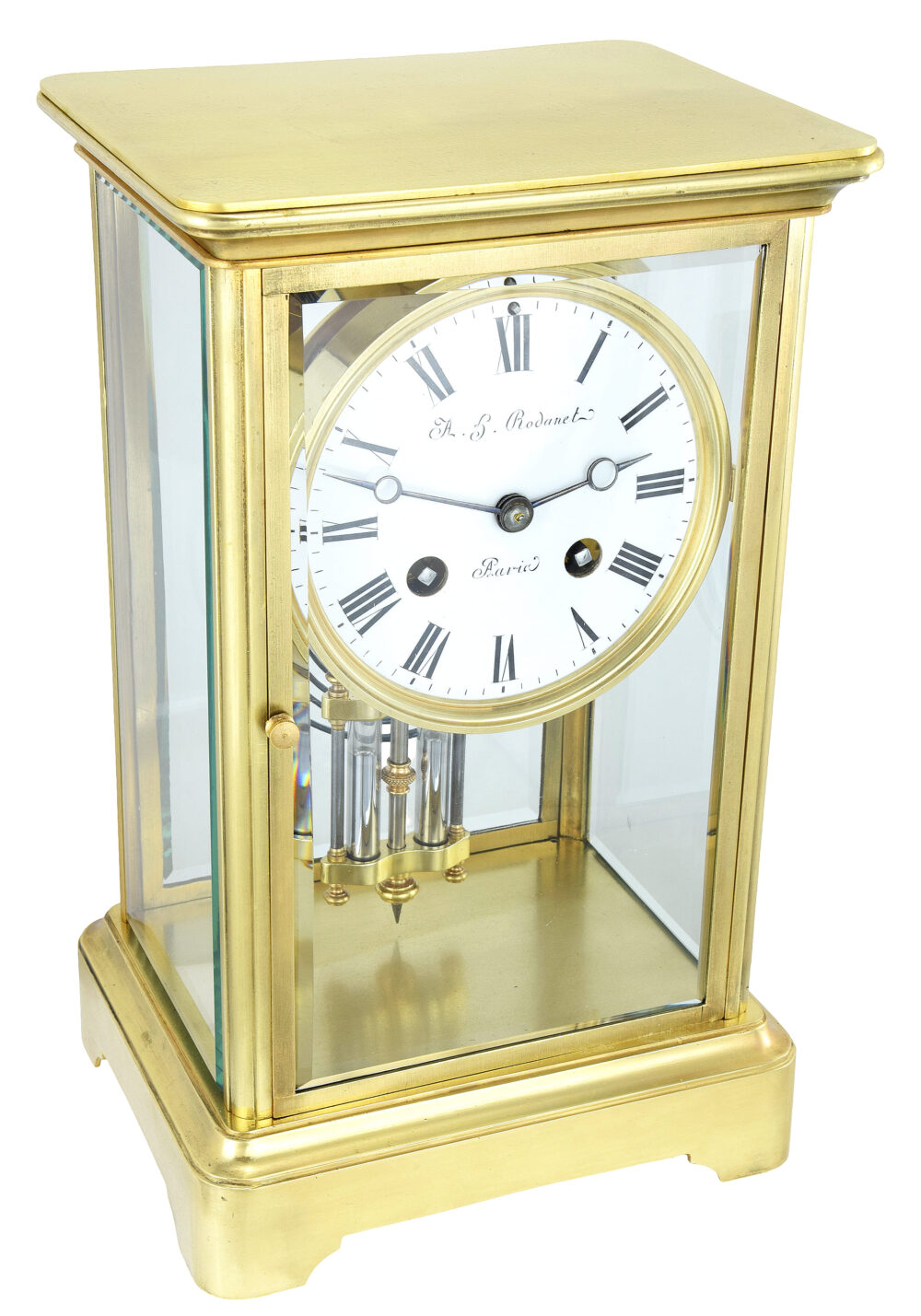
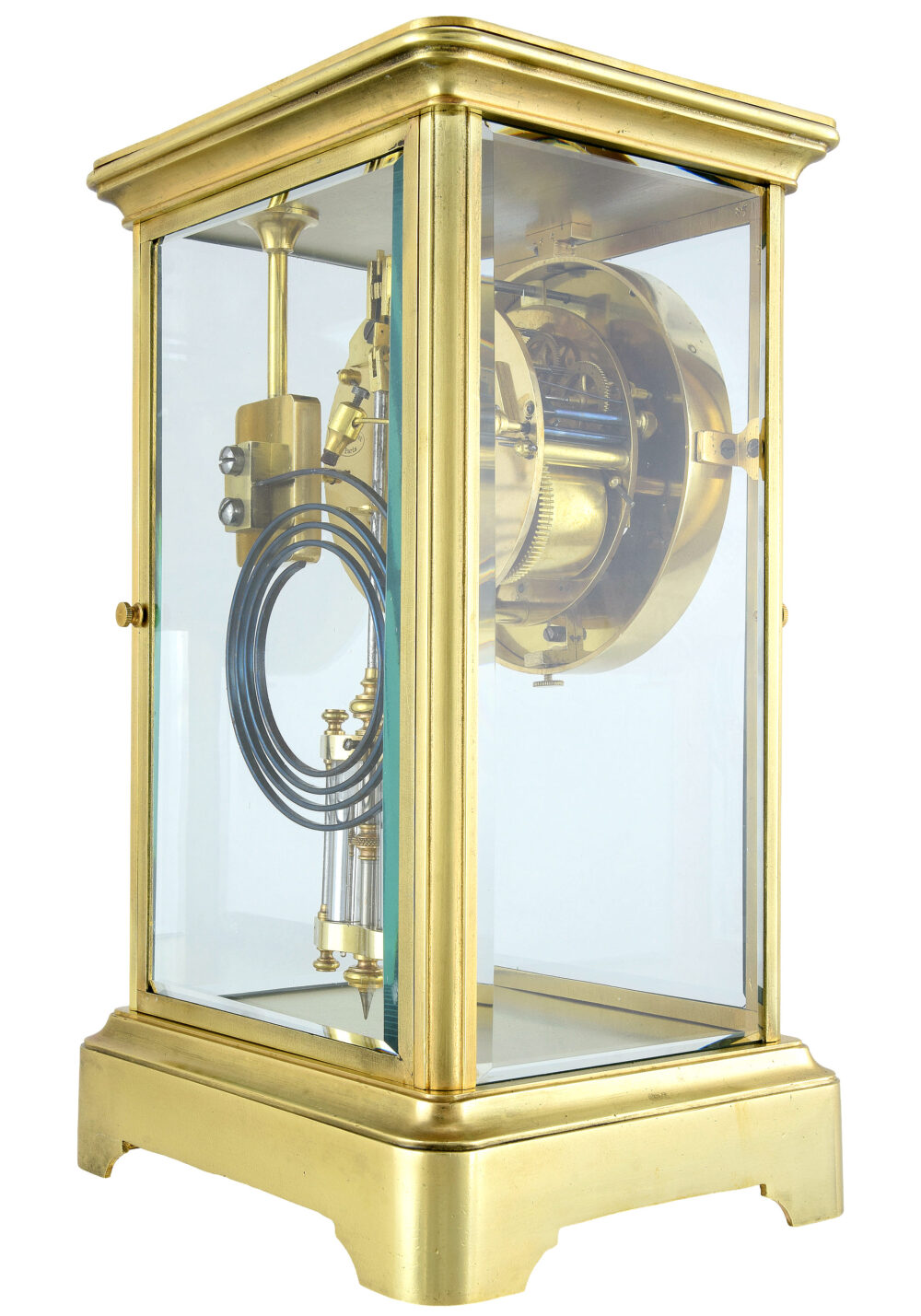
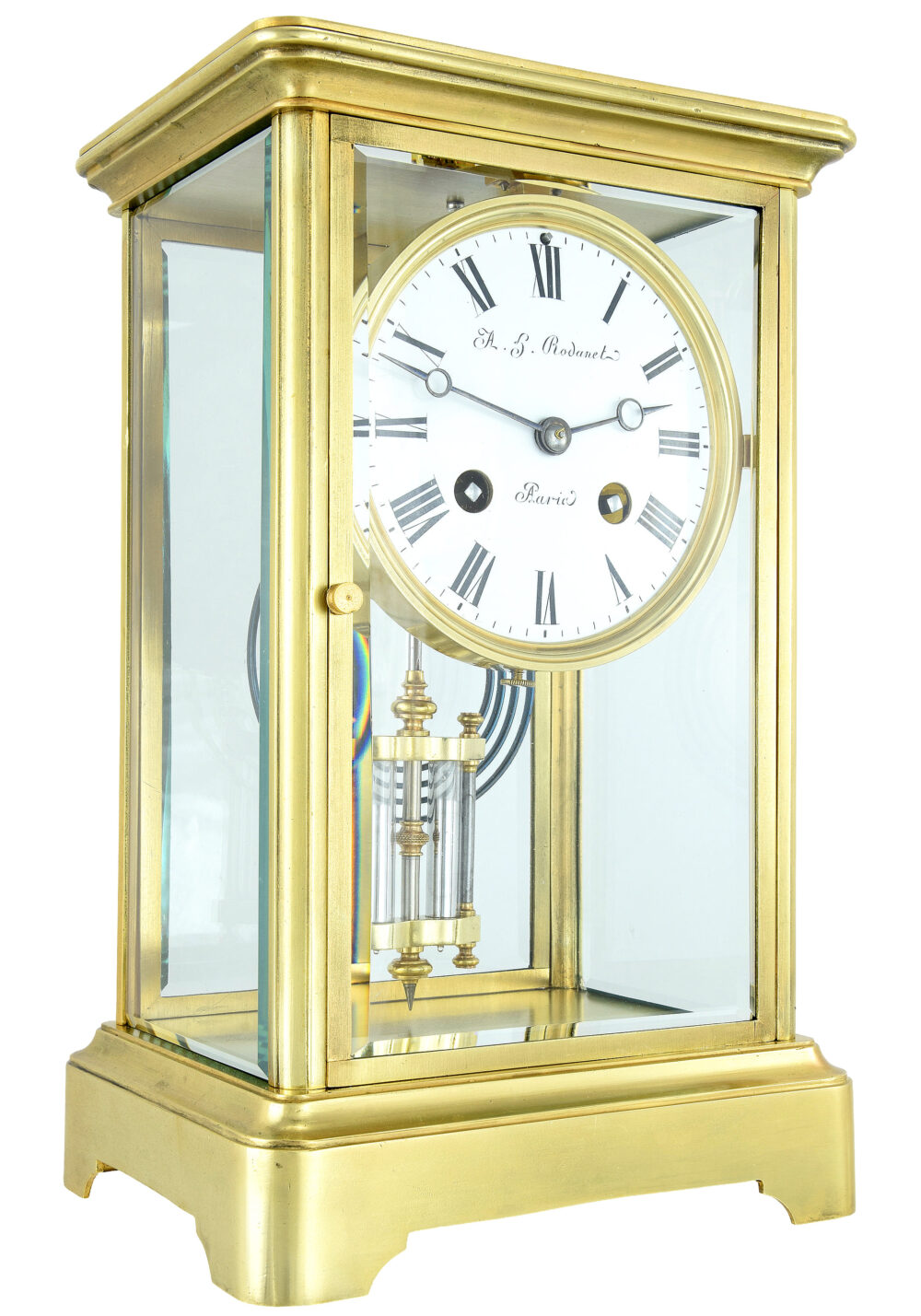
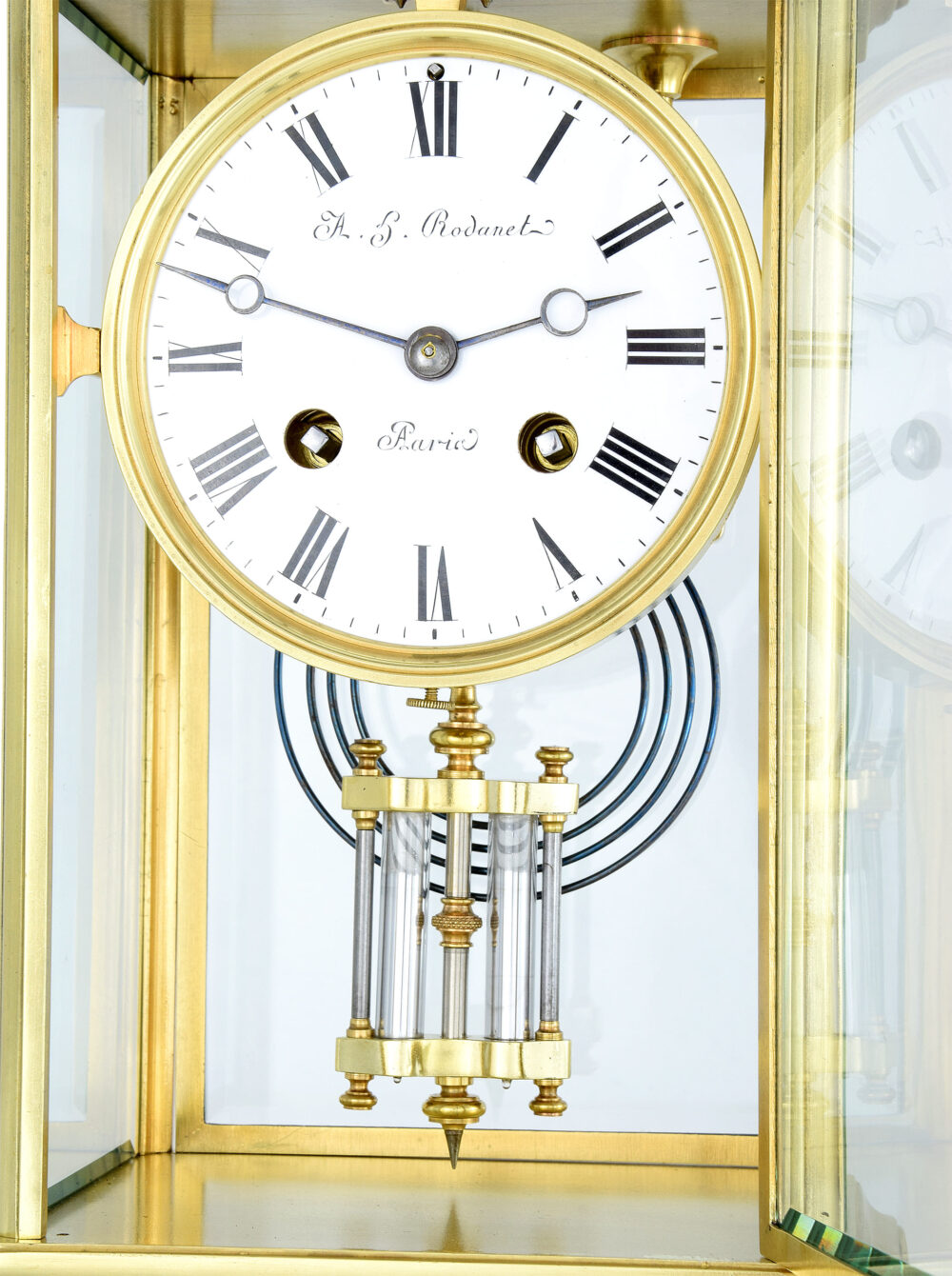
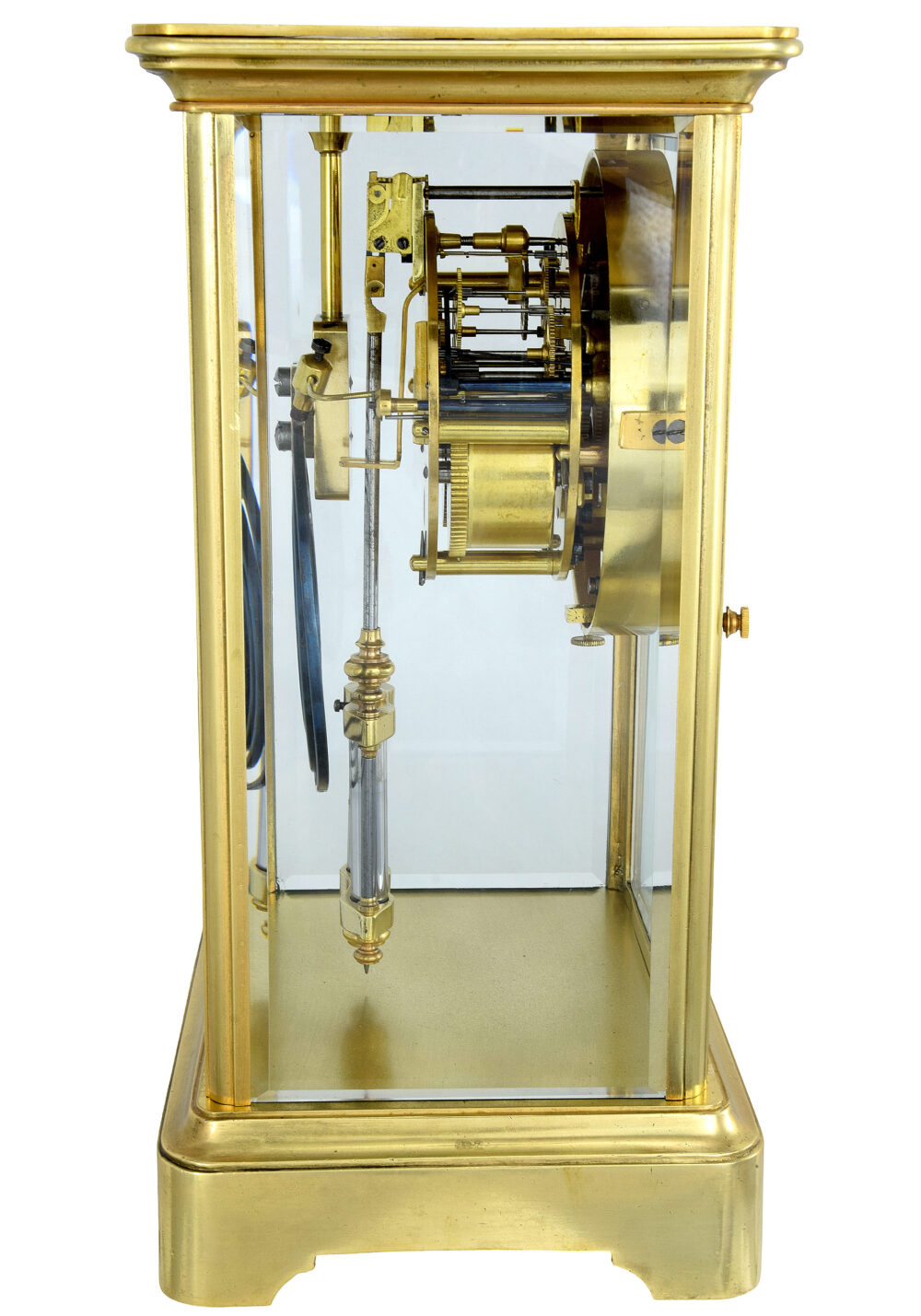
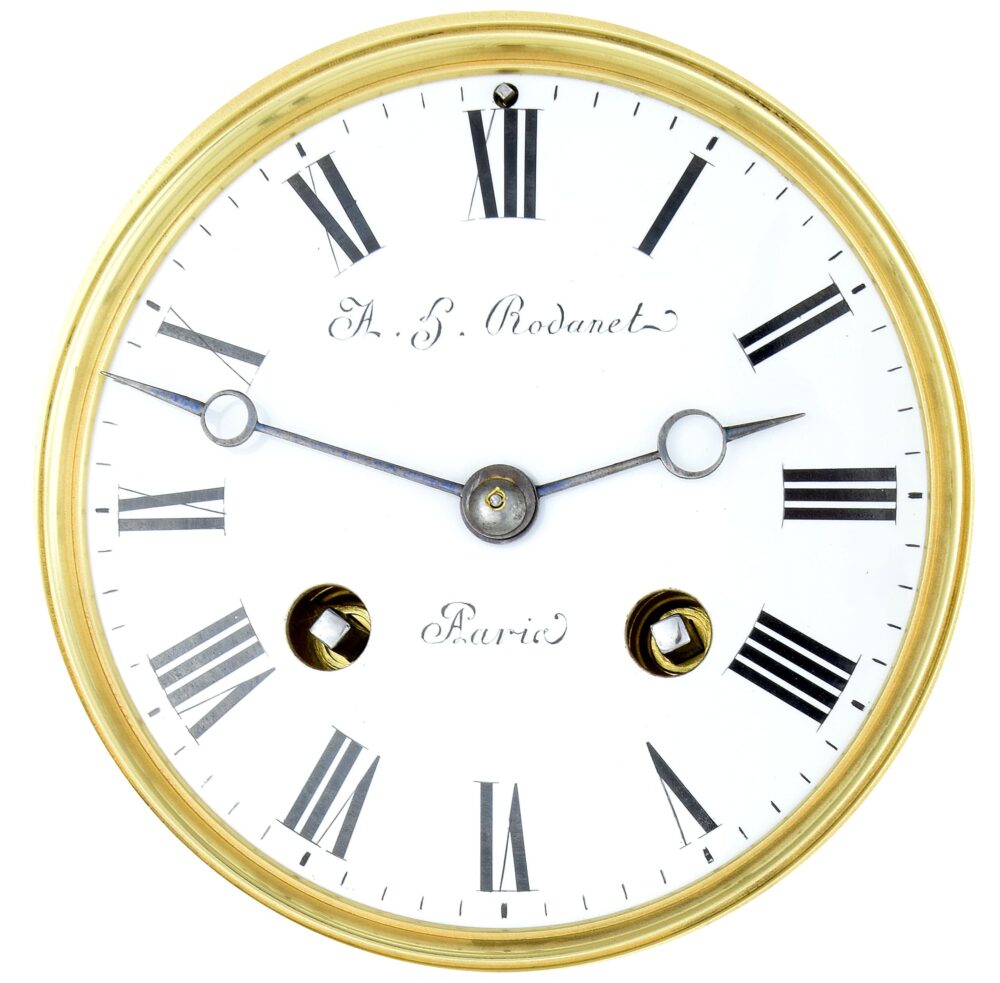
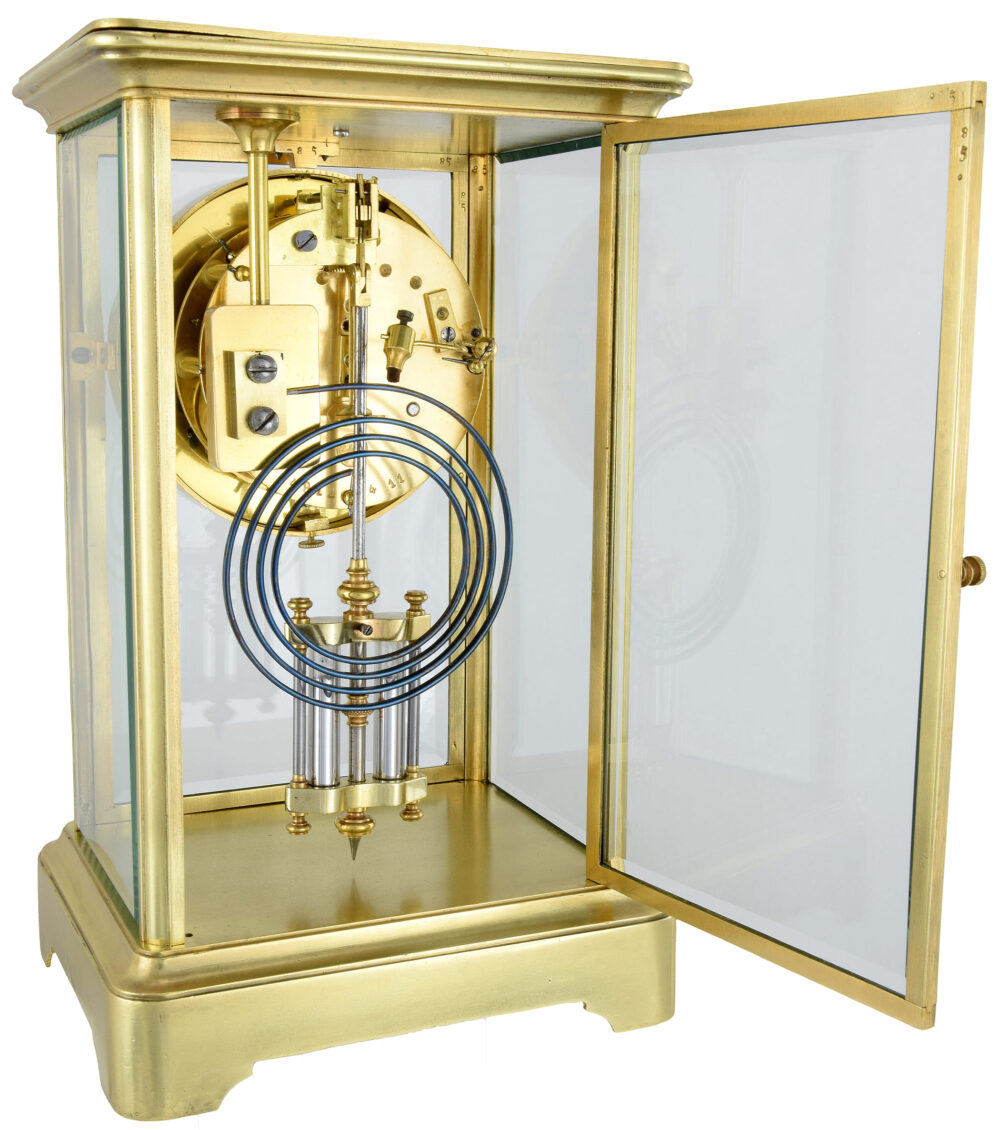
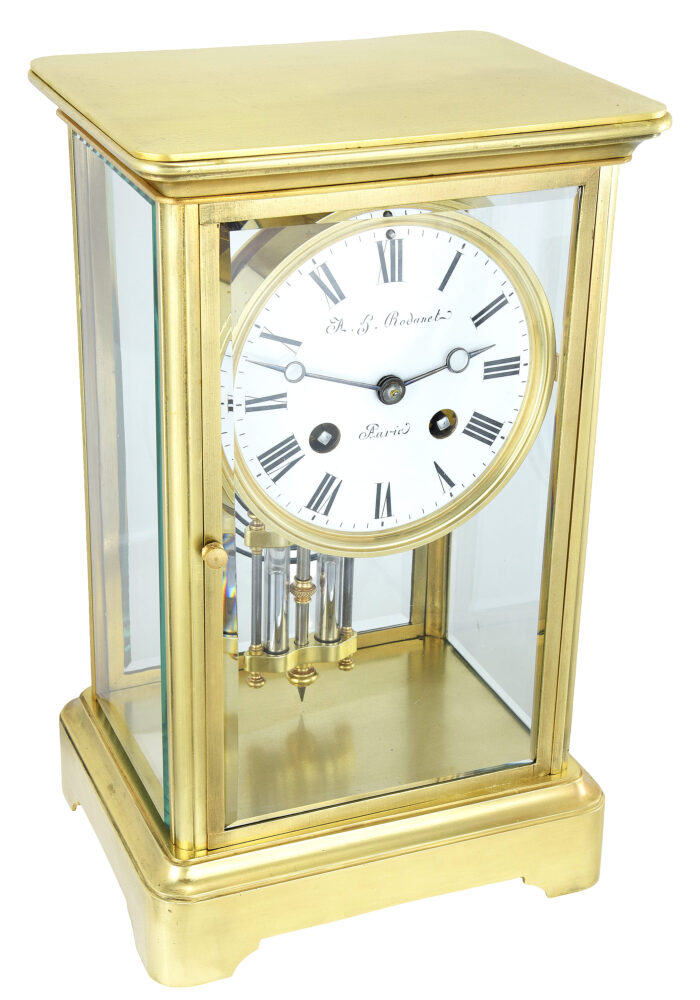
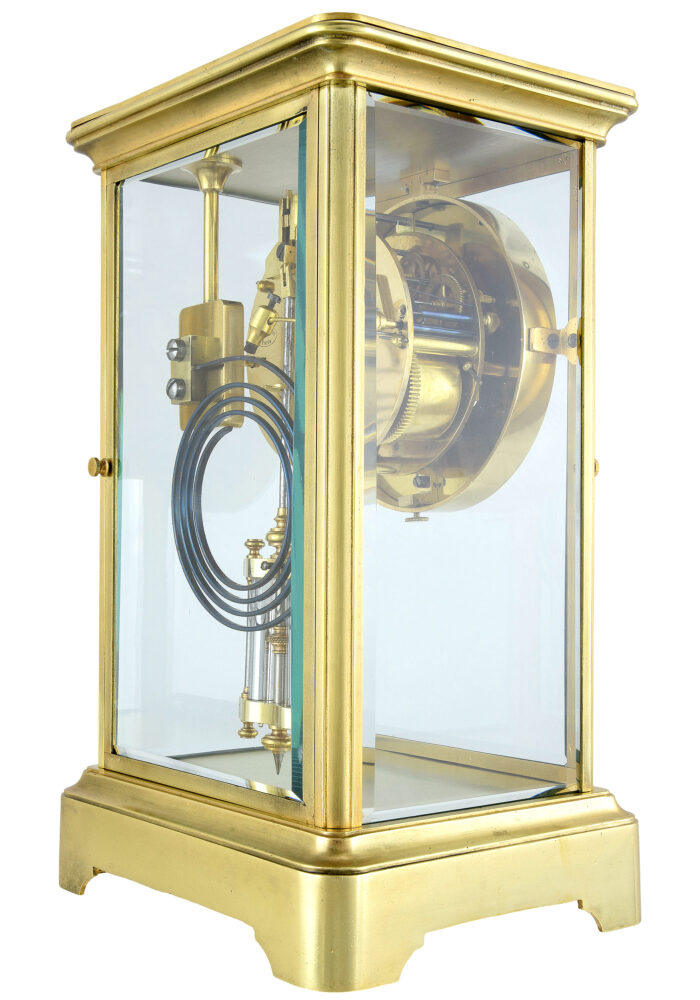
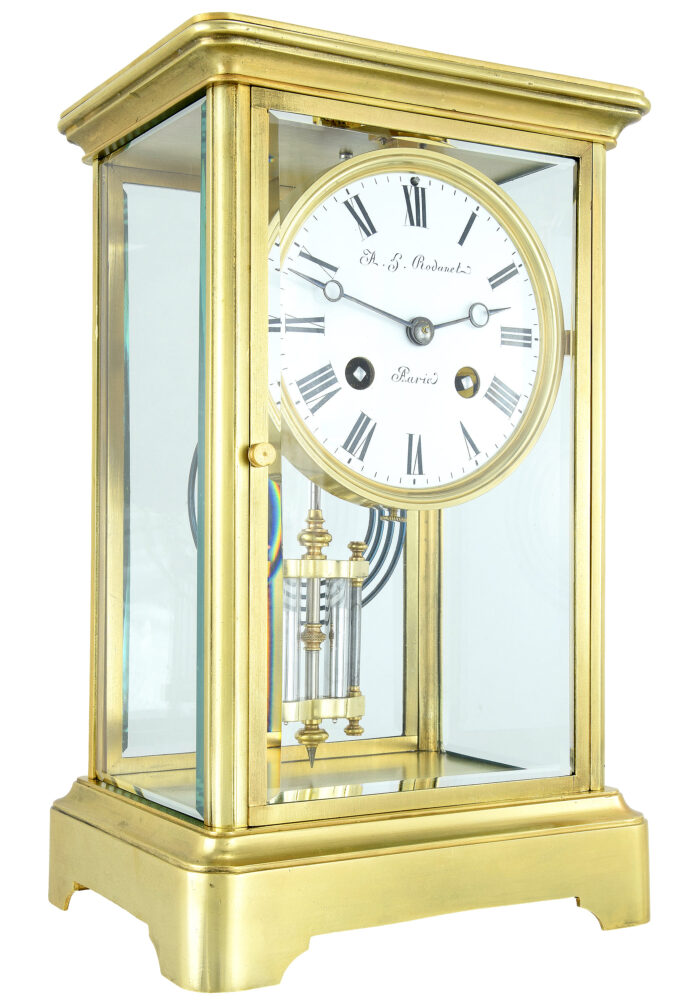
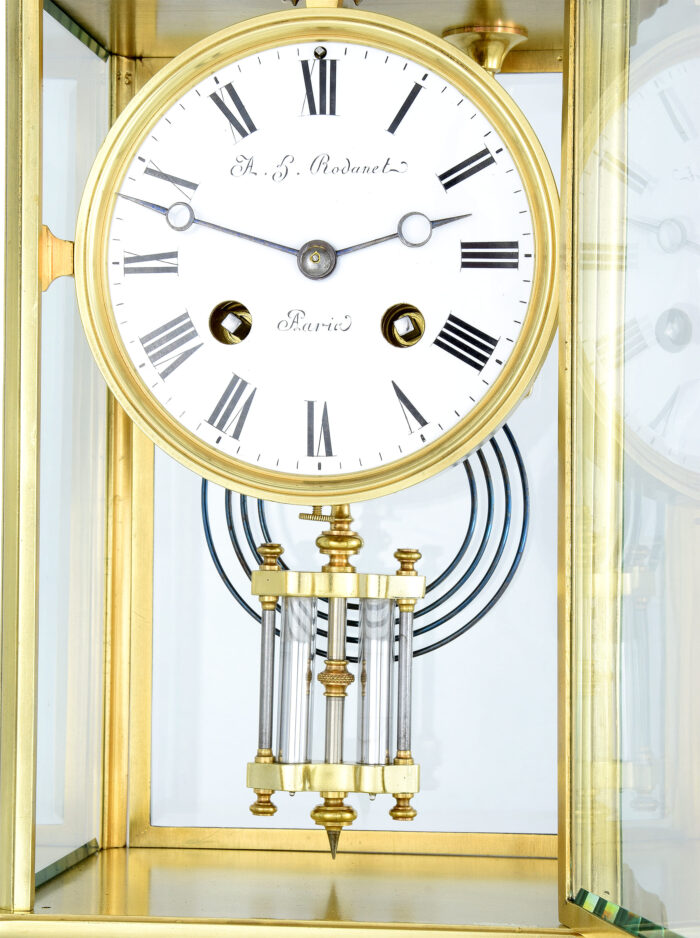
Clock glass cage Watchmaker: Vinventi et Cie 1860
| Materials: | Gilt bronze |
|---|---|
| Era: | Napoléon III 1852 - 1870 (Second Empire) |
| Period: | XIXe siècle |
| Provenance: | French |
- Restored to original condition with original appearance.
- Full overhaul of watch movement, perfect working order.
- Perfect authenticity, without modification.
- Original gilding.
- Winding key & pendulum
- Operating instructions, how to start your clock.
- Certificate of authenticity, invoice.
- Ringtone on ancient bell, hour and a half-hour
Height: 26 cm
Width: 16 cm
Depth: 12 cm
Description
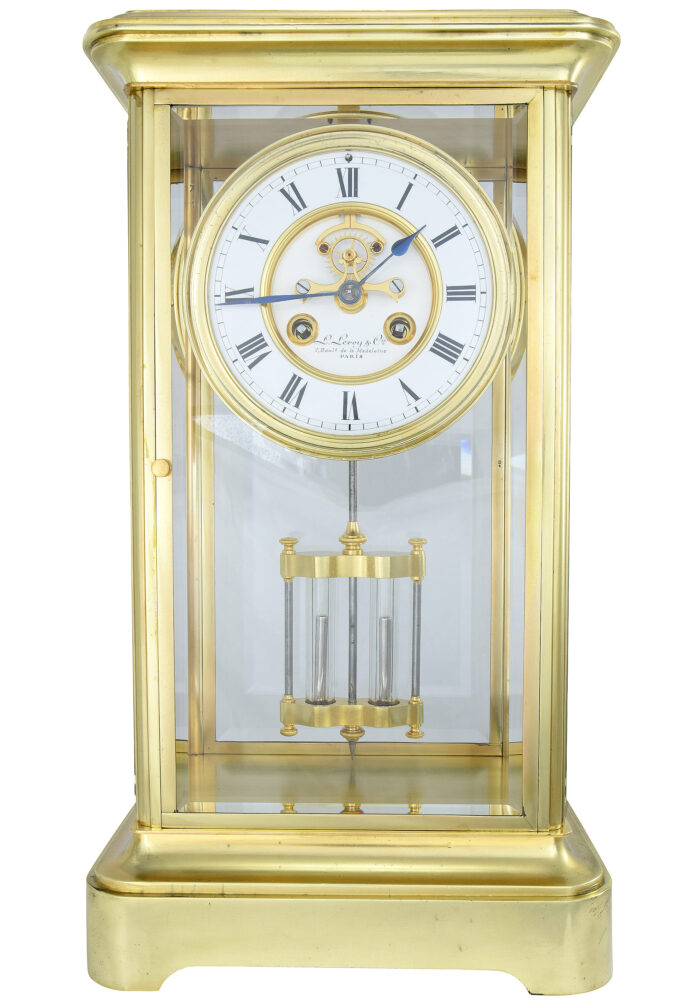
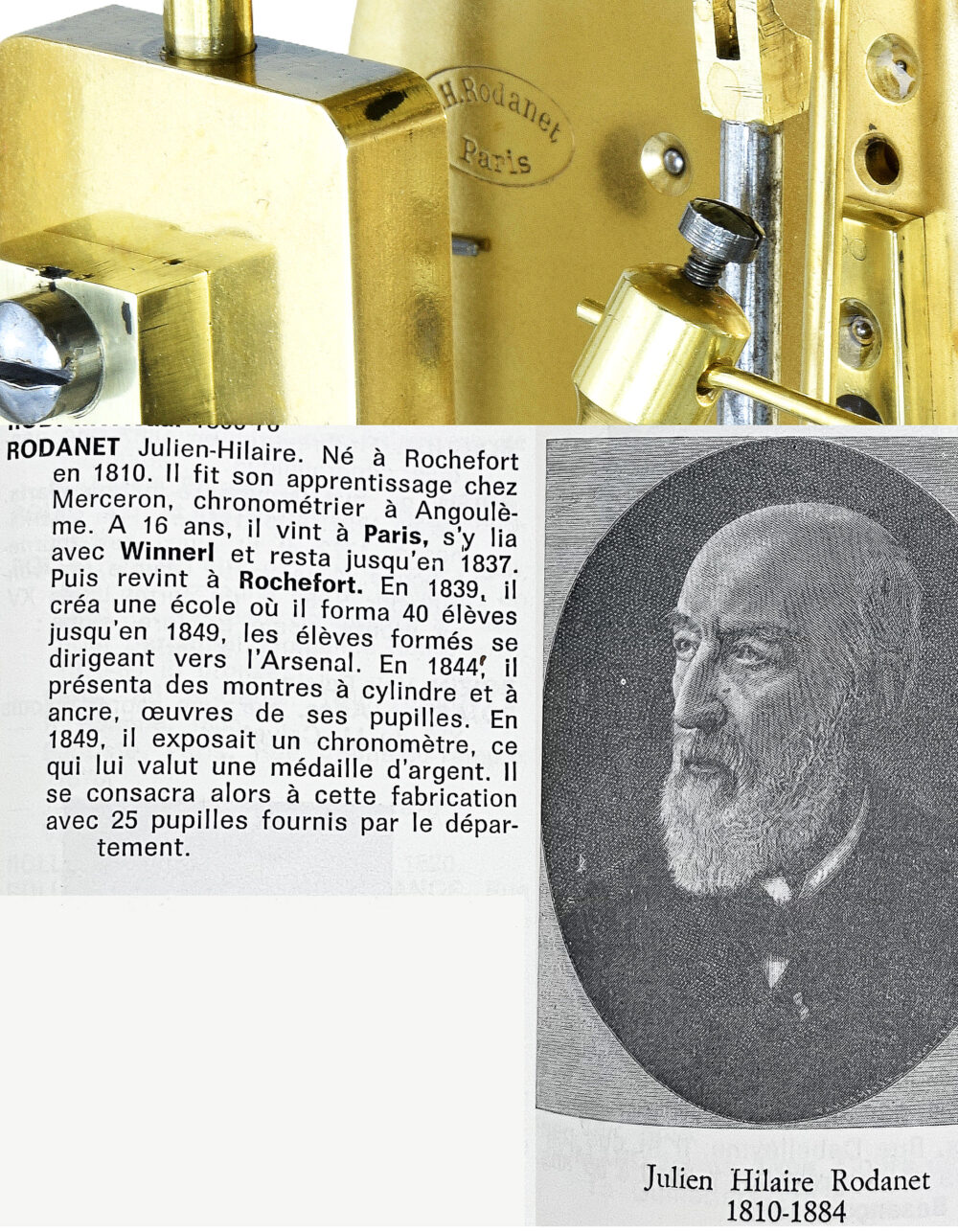
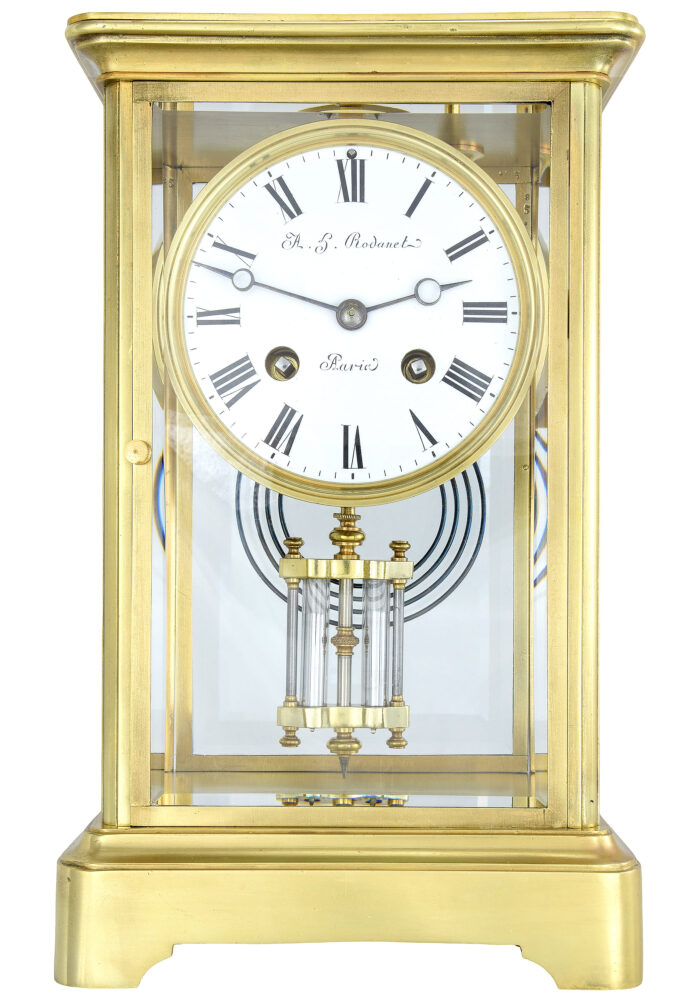
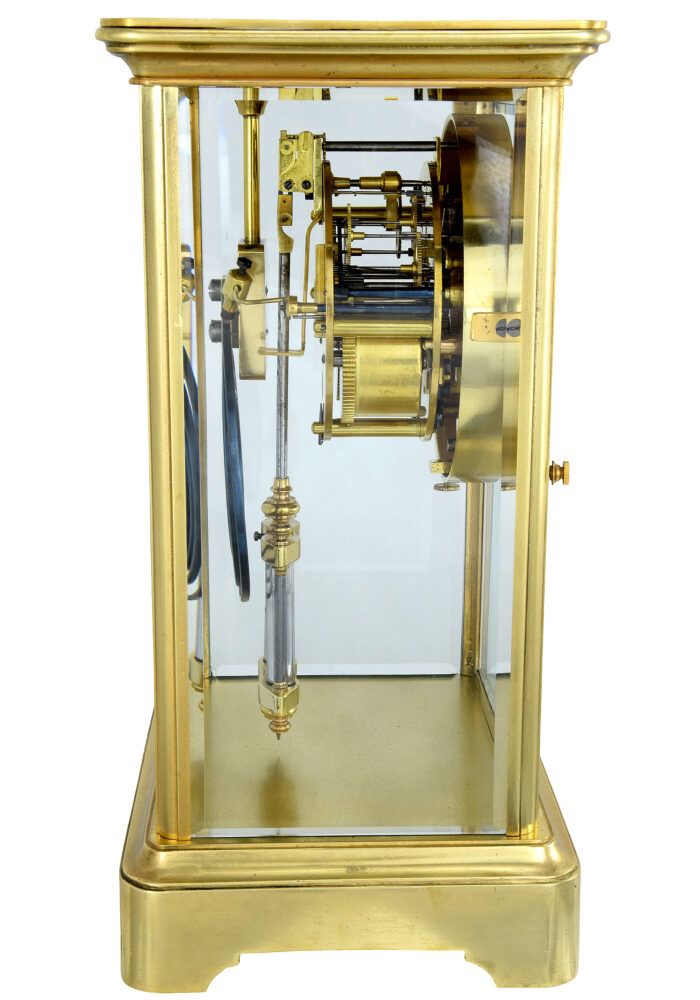
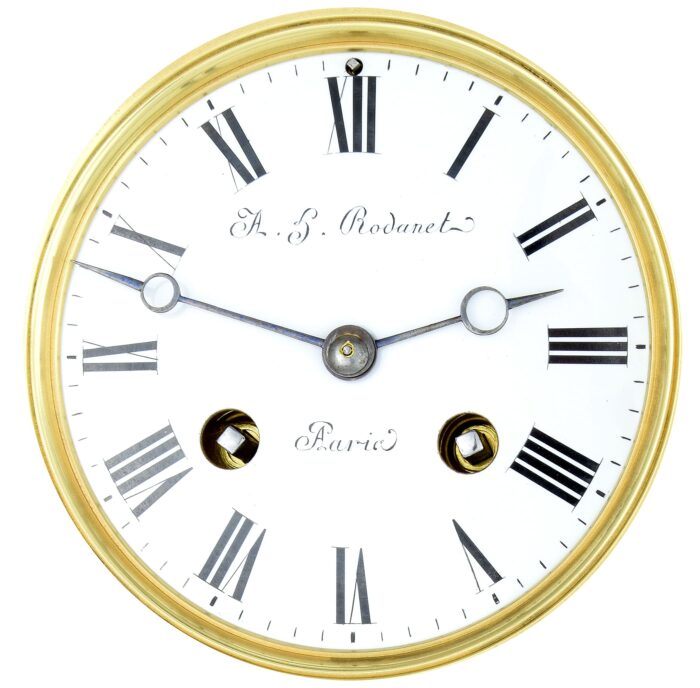
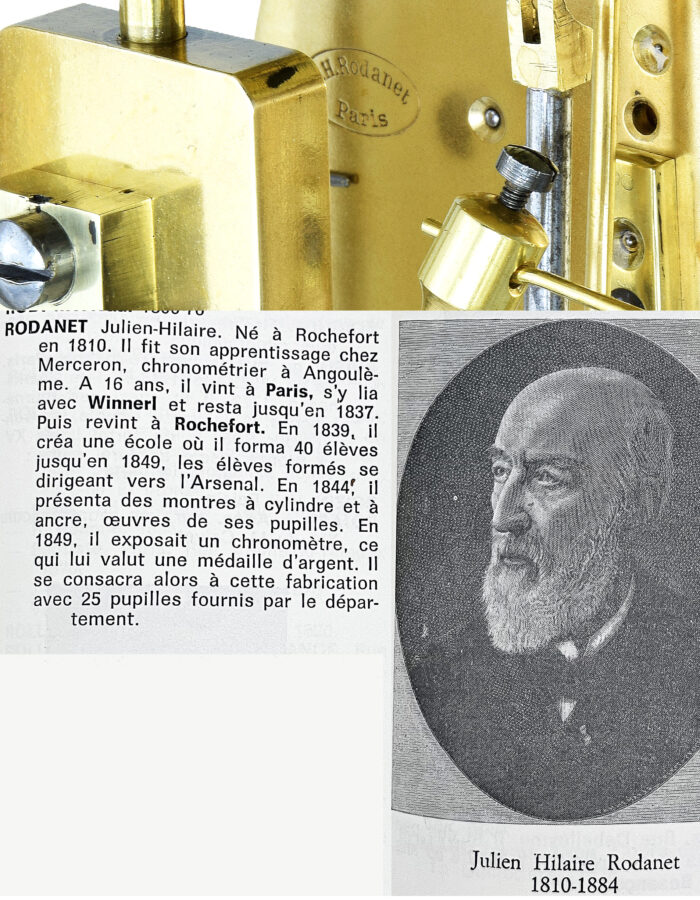
A luxurious four-glass mantel clock from the Napoleon III period, circa 1860, signed on the dial and stamped on the movement “A. J. Rodanet à Paris”, bearing the name of a Parisian clockmaker listed in Tardy’s Dictionary of French Clockmakers. This elegant precision timepiece is distinguished by the noble architecture of its gilt-bronze case, the transparency of its glazed panels and the sophistication of its exposed movement. Its aesthetic, both rigorous and refined, showcases the mechanical ingenuity of nineteenth-century horology, making this clock a remarkable collector’s piece for both its quality of manufacture and its technical interest.
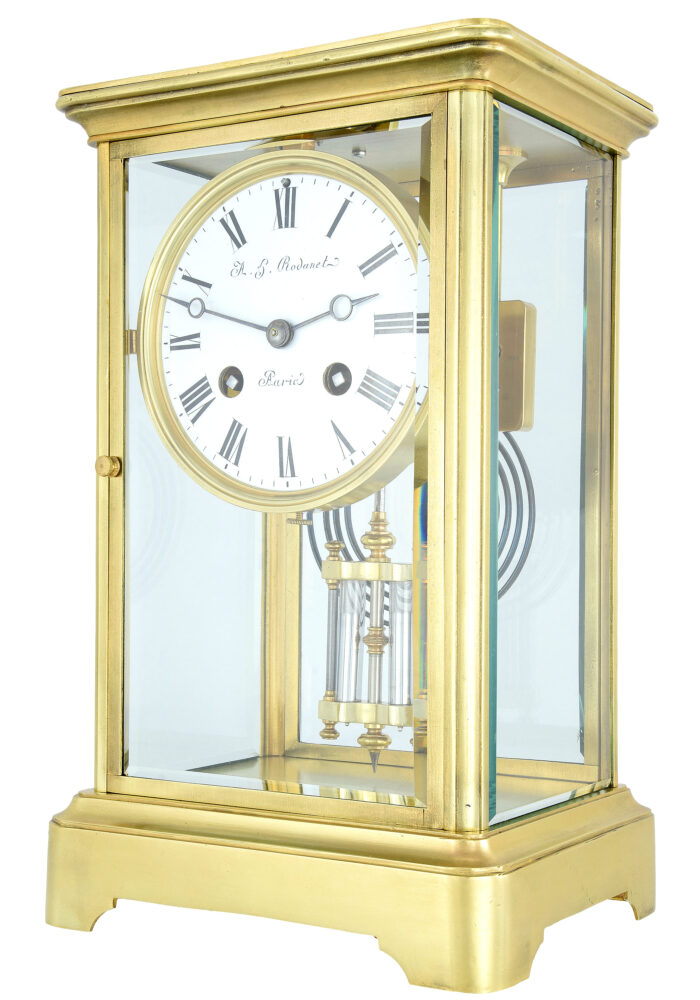
The case rests on a rectangular base with restrained yet powerful lines, whose successive mouldings emphasise the solidity and stability of the whole. The four corner uprights, featuring carefully worked profiles, support an overhanging upper cornice with several stepped mouldings, lending the composition an architectural silhouette and an elegant presence. The gilt-bronze framework forms a luminous setting for four thick glass panels with bevelled edges, whose transparency allows the movement to be admired from various angles. The quality of the joints, the regularity of the mouldings and the harmonious proportions testify to meticulous craftsmanship, combining structural robustness with the desire to showcase the mechanism.
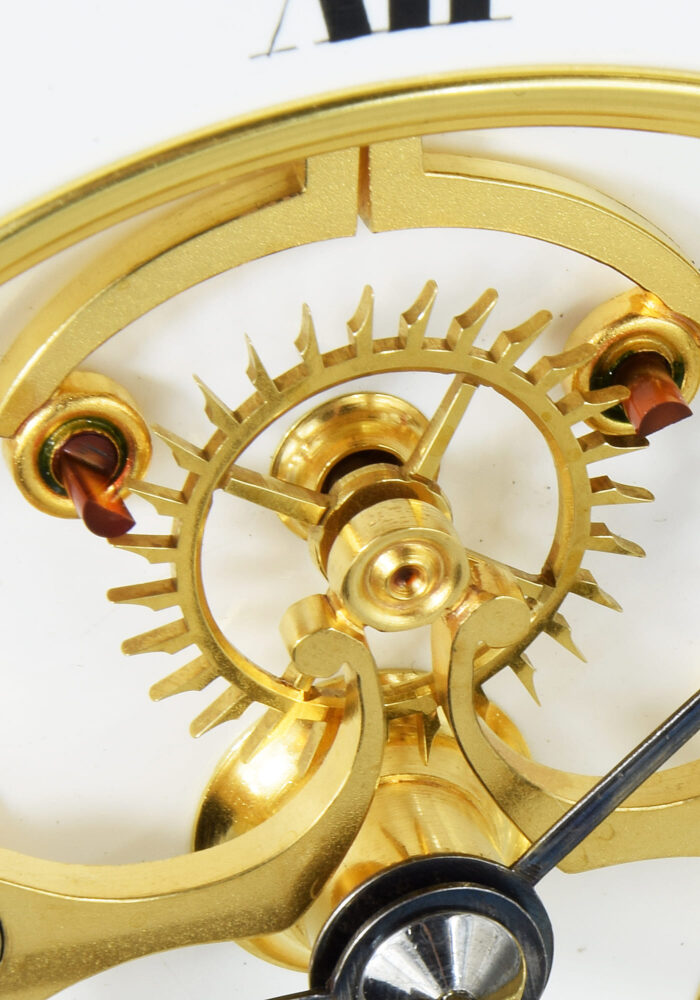
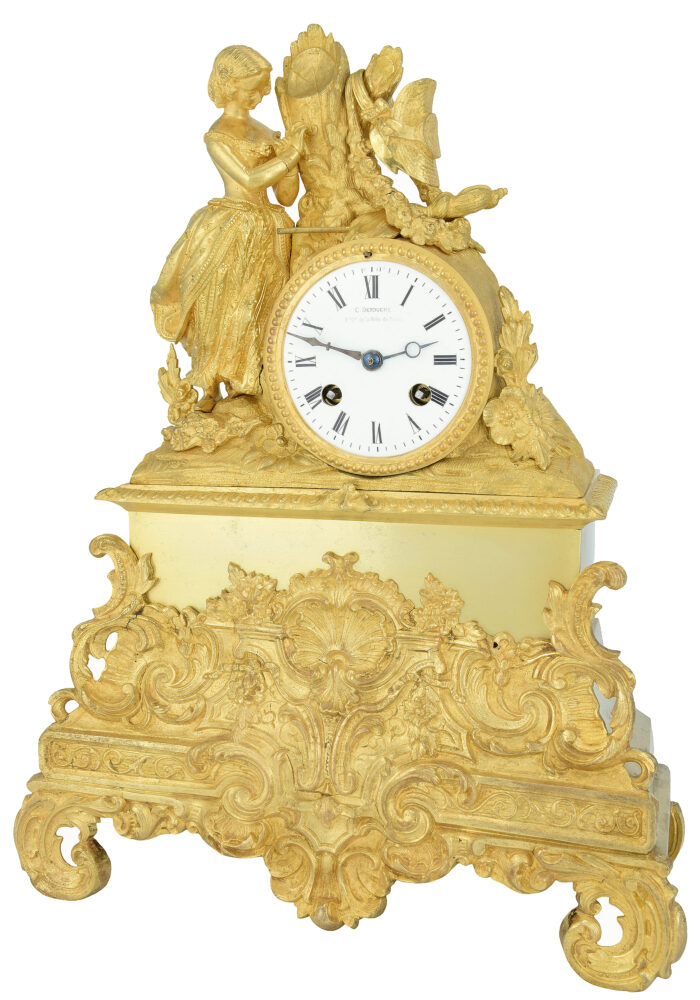
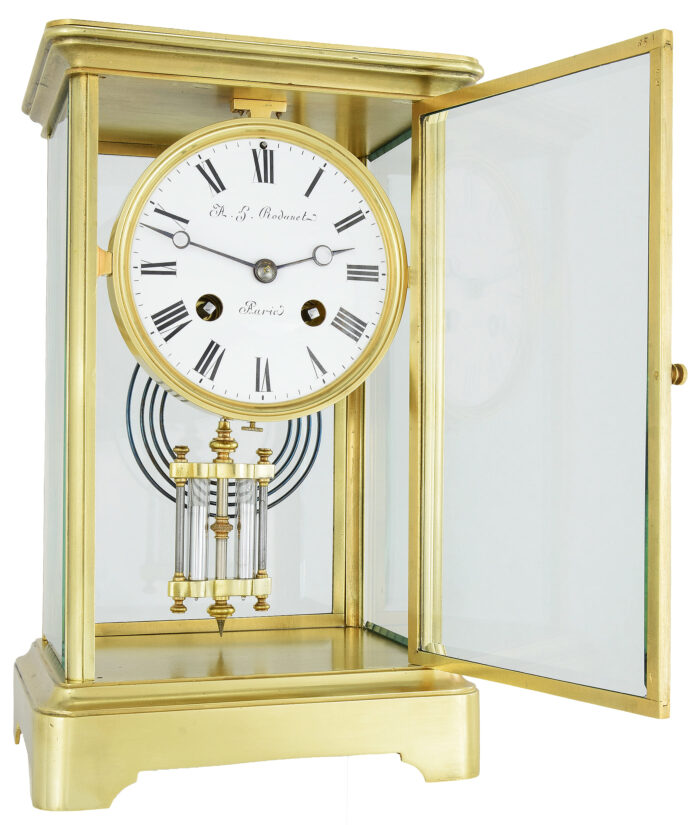
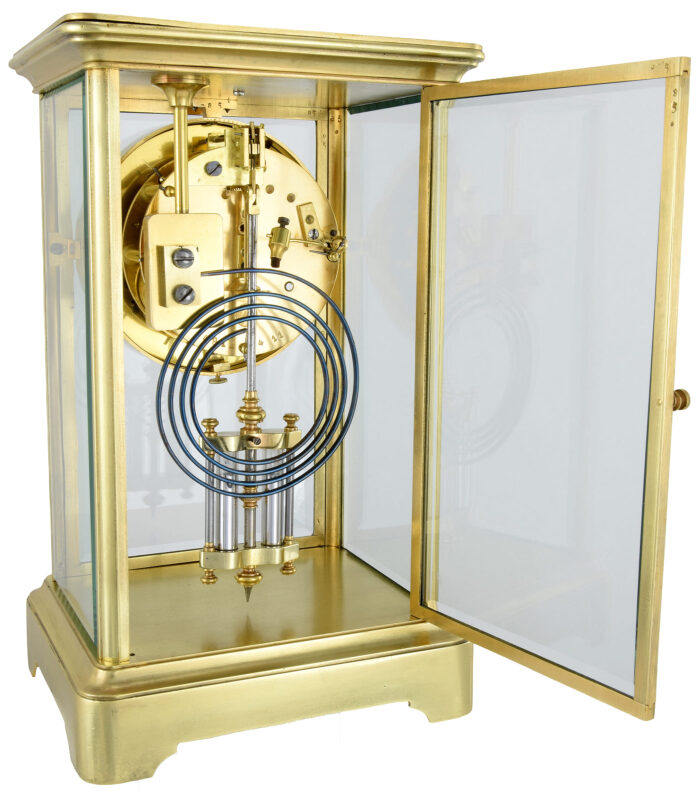
At the top, an overhanging rectangular cornice, accentuated by stepped mouldings, crowns the structure. It rests upon a four-sided glazed case framed by vertical gilt-bronze uprights with softened edges. At the base, a substantial, similarly moulded plinth provides a stable foundation while extending the geometric elegance of the design. The front features a circular white enamel dial, surrounded by a gilt-bronze bezel and fitted with black Roman numerals, a chemin-de-fer minute track and finely crafted hands. Two winding apertures provide access for winding the movement, while the signature “A. J. Rodanet” and the inscription “Paris” identify the clockmaking establishment. The hinged front glass door provides convenient access to the dial and movement, while the side and rear glass panels offer an unobstructed view of the movement and its working components. The glazed rear door, in particular, reveals the mechanical arrangement and pendulum, emphasising the clock’s dual aesthetic and technical purpose.
The mercury-jar pendulum, suspended beneath the movement, is one of the most remarkable features of this precision timepiece. This ingenious device uses the thermal expansion of mercury to compensate, to a certain extent, for variations in the pendulum rod’s length caused by temperature changes. As the temperature rises, the expansion of the mercury alters the distribution of mass, helping to maintain a more constant period of oscillation. This principle of thermal compensation, particularly valued in fine nineteenth-century horology, reflects the efforts made by clockmakers to improve the timekeeping accuracy of their timepieces. The presence of this mechanism, combined with a fully visible construction, lends the clock additional technical interest and offers a tangible illustration of the ingenuity of horological solutions developed during this period.
With its balanced architecture, glazed gilt-bronze case and exposed movement, this four-glass clock brings together the qualities sought by collectors of antique horology: decorative elegance, mechanical interest and the signature of an identifiable Parisian clockmaker. The mercury-compensated pendulum is a particularly noteworthy feature, offering an instructive insight into nineteenth-century clockmaking expertise. Both a work of decorative art and a testament to the evolution of precision mechanisms, this clock would make a distinguished addition to a specialised collection, a horological cabinet or a classically styled interior, where it would bring a refined and timeless presence.
Original movement, unaltered and without modification. Striking the hours and half-hours on a gong, with a clear and authentic tone.
Questions
Easily pay for your purchases using our highly protected bank card system with SSL certificate and 256 bit encryption, ensuring confidentiality when any information is transferred. On a web browser, the OVH SSL certificate activates the HTTPS protocol and displays a padlock in the navigation bar. This shows that any transaction is encrypted and confidential, and that your website address has been authenticated.
Our items mainly stem from the inheritance of objects, preciously looked after over numerous generations. There is a stringent selection process for each object ensuring perfect authenticity and the optimal amount of gilding
We do not use the term “Restoration”, which implies a significant transformation or major repair that modifies an object’s authenticity or original appearance. Each object is completely dismantled, then thoroughly cleaned part by part; our cleaning technique restores shine without adversely affecting the gold. We then put the clock back together, returning all the various parts to their origin location, as well as all the nuts and screws. Subsequently, the item is inspected to ensure it is perfectly even, symmetrical, and smooth, etc.
The clock’s movement undergoes a complete overhaul; it is totally dismantled, cleaned and each individual part is polished. The duration of this procedure affects the shine: we prefer to obtain a brilliant shine, in keeping with the gilding of the object. To increase the strength and quality of the gears, we apply a very important procedure, known as bouchonnage, to correct for wear accumulated over years of operation, consisting in the placing cork of stoppers in any pivot holes that have become deformed by wear. After the clock has been completely reassembled, it is tested over a long period of time to ensure that the movement, as well as the hour and half-hour strikes, are operating correctly.
- Akzeptierte Kreditkarten: Visa, MasterCard, American Express, JCB, Discover und Diners Club.
- Bank transfer: You can also send us a copy of the bank transfer order to speed up the processing of your order.
Upon dispatch of your order, you will be sent a parcel tracking number by email.
Delivery anywhere in the world.
France: - Clocks: 3 days preparation work + 2 days for delivery - Total: 5 business days - Decorative objects: 1 days preparation work + 2 days for delivery - Total: 3 business days
Europe - Clocks: 3 days preparation work + 3 days for delivery - Total: 6 business days - Decorative objects: 1 day preparation work + 3 days for delivery - Total: 6 business days
Other countries - Clocks: 3 days preparation work + 3-8 days for delivery - Decorative objects: 1 days preparation work + 3-8 days for delivery
Easily pay for your purchases using our highly protected bank card system with SSL certificate and 256 bit encryption, ensuring confidentiality when any information is transferred. On a web browser, the OVH SSL certificate activates the HTTPS protocol and displays a padlock in the navigation bar. This shows that any transaction is encrypted and confidential, and that your website address has been authenticated.
You will receive—by email and a paper version—an explanatory document containing all the necessary instructions and recommendations for operating your clock. We also provide assistance over the phone to guide you through the start-up procedure. Of course, we will continue to be available—by both telephone and email—to answer any questions you may have. For calls in German or English, please make an appointment first via email, providing us with your telephone number, and the date and time you wish to contact us. Contact.
- Click on the button “add to basket” to add an object. - Once you have finished your order, click on “view contents of basket” located at the bottom of the screen or on small the “shopping trolley” icon at the top right. - click “Complete my order” or “order” - Fill in the invoicing address details, you also have the possibility to send the parcel to a different address. - Select the payment method - To confirm your order, click “order now”
By email, you will be sent: - confirmation of your order & payment - Parcel tracking information
Every purchase comes with a certificate of authenticity and an invoice
High quality certificate of authenticity printed on photo paper with text and photos providing all the information concerning your object. Detailed invoice indicating the price paid for the object.