

10 years’ of mail orders, hundreds of parcels sent around the globe. Thanks to our experience, we can insure—at our own risk—the delivery of each object to your chosen address.
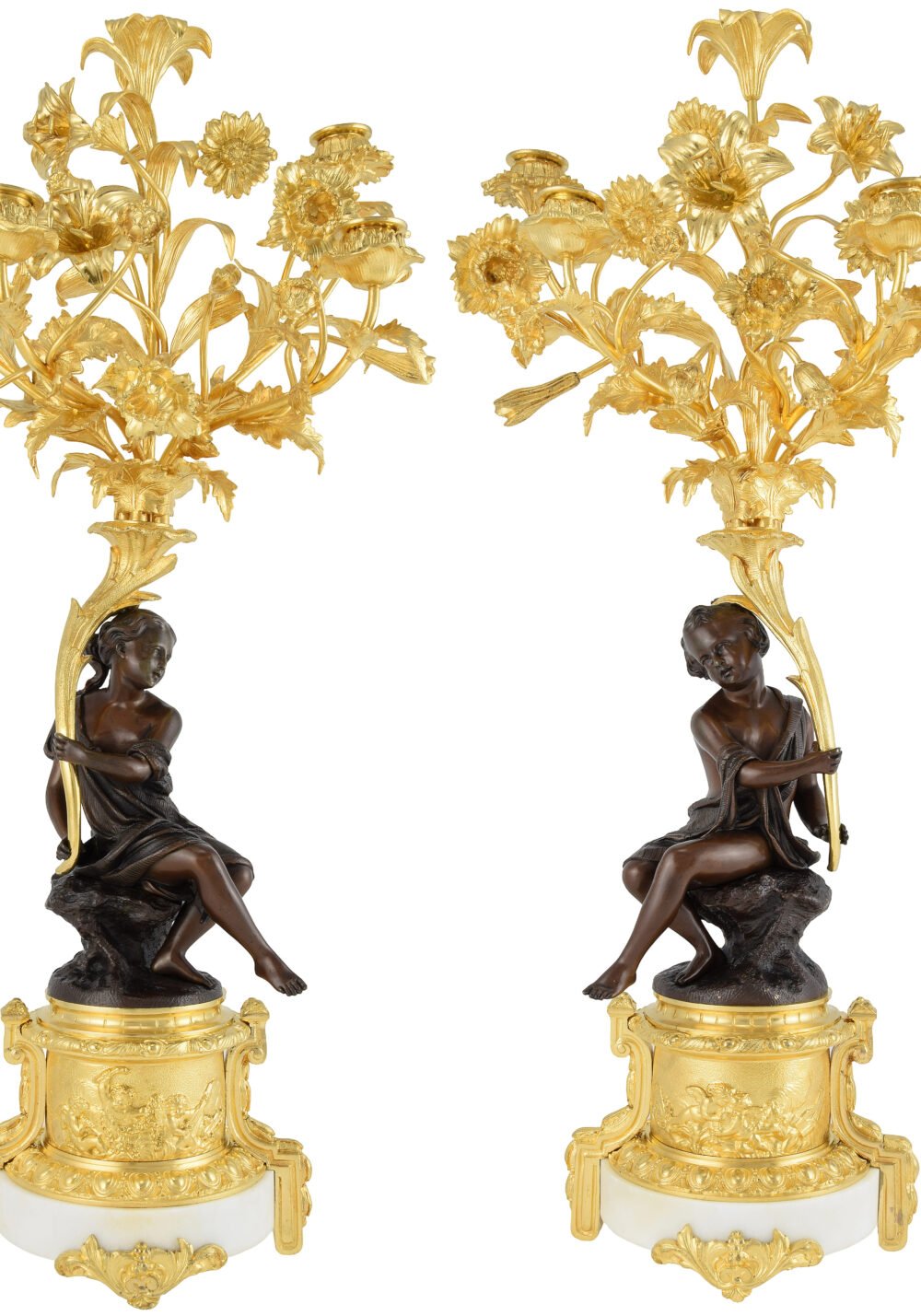
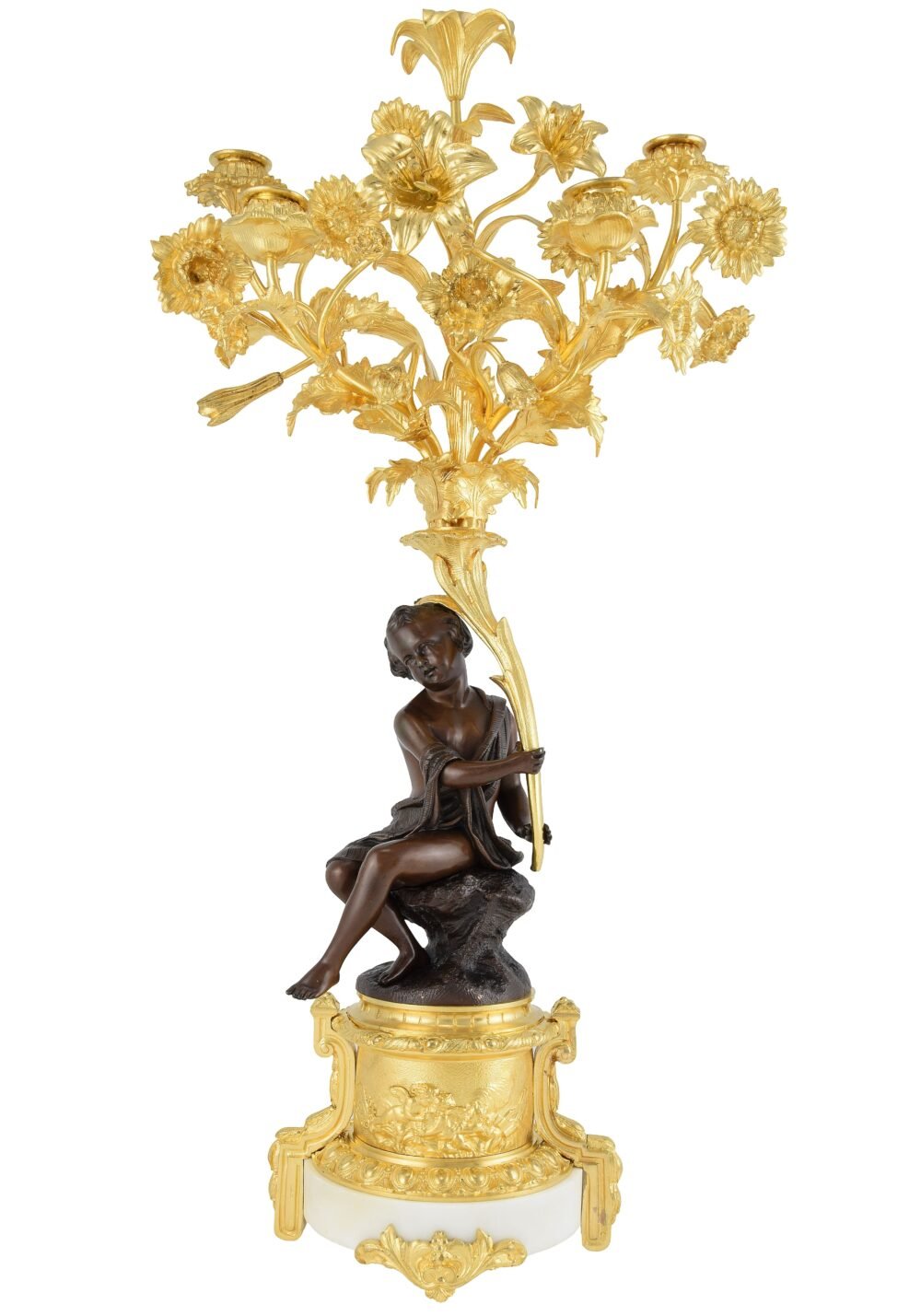
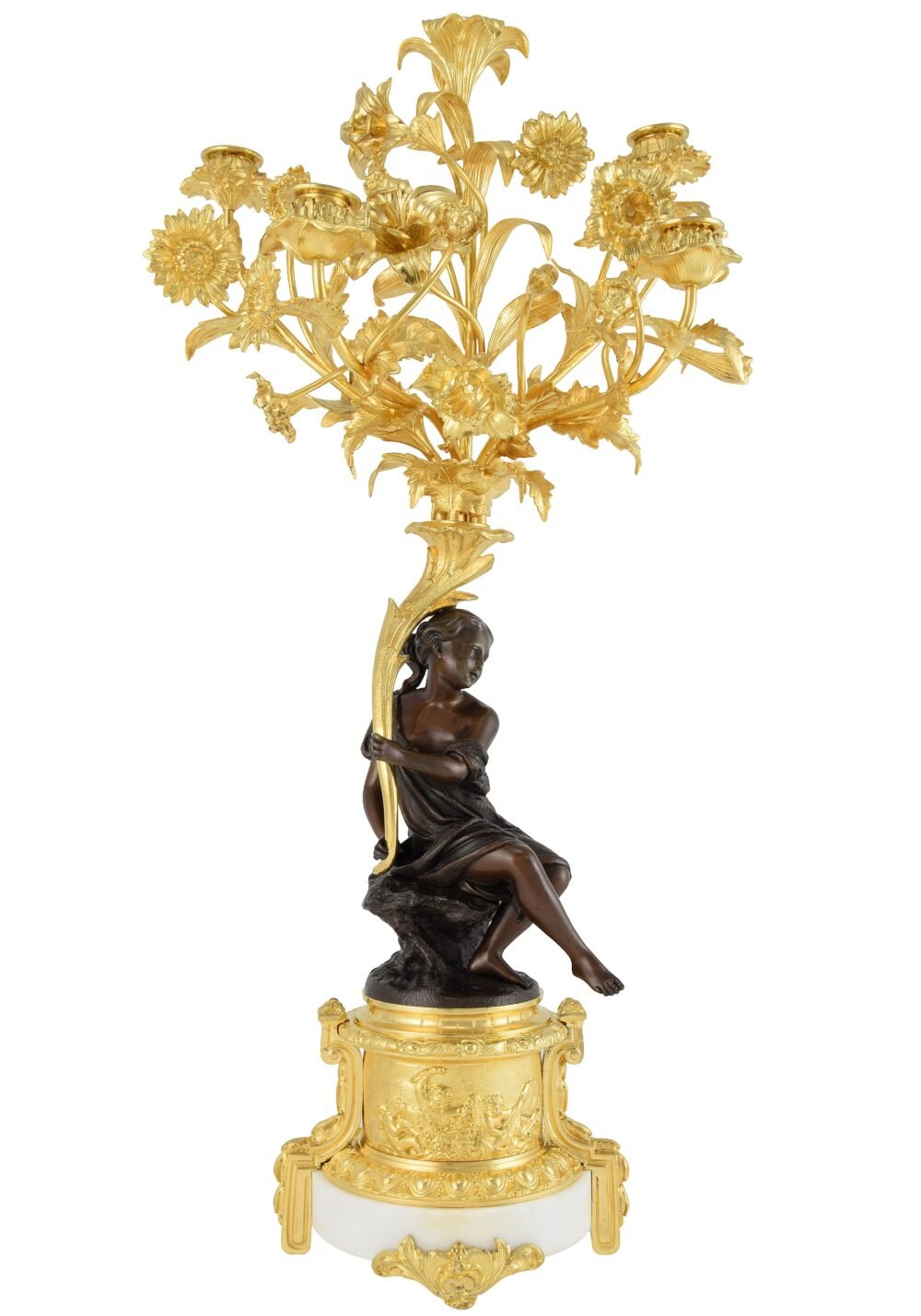
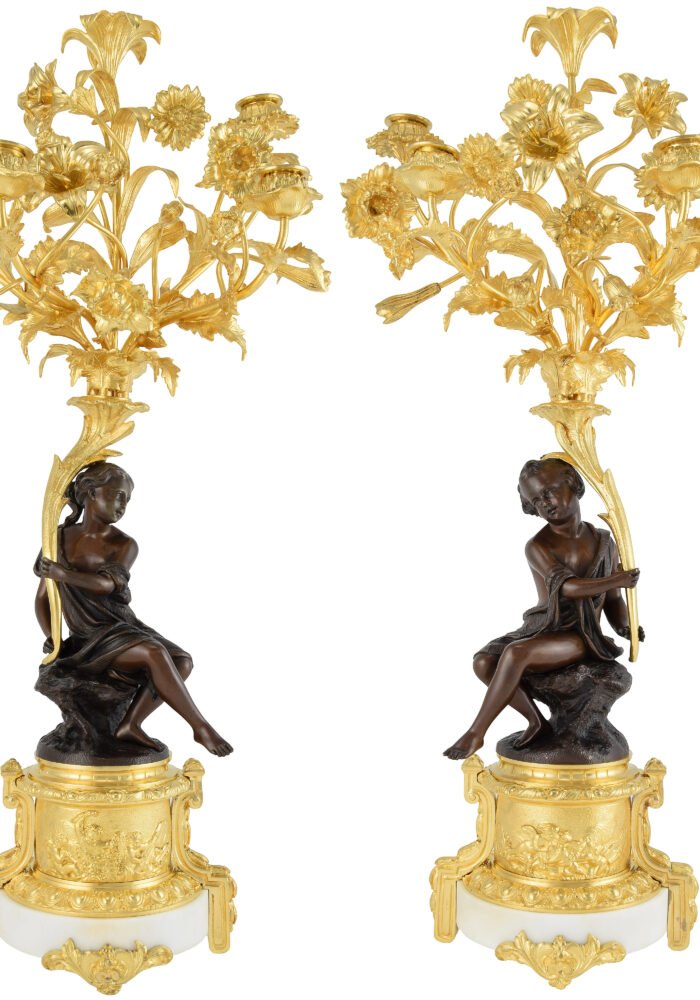
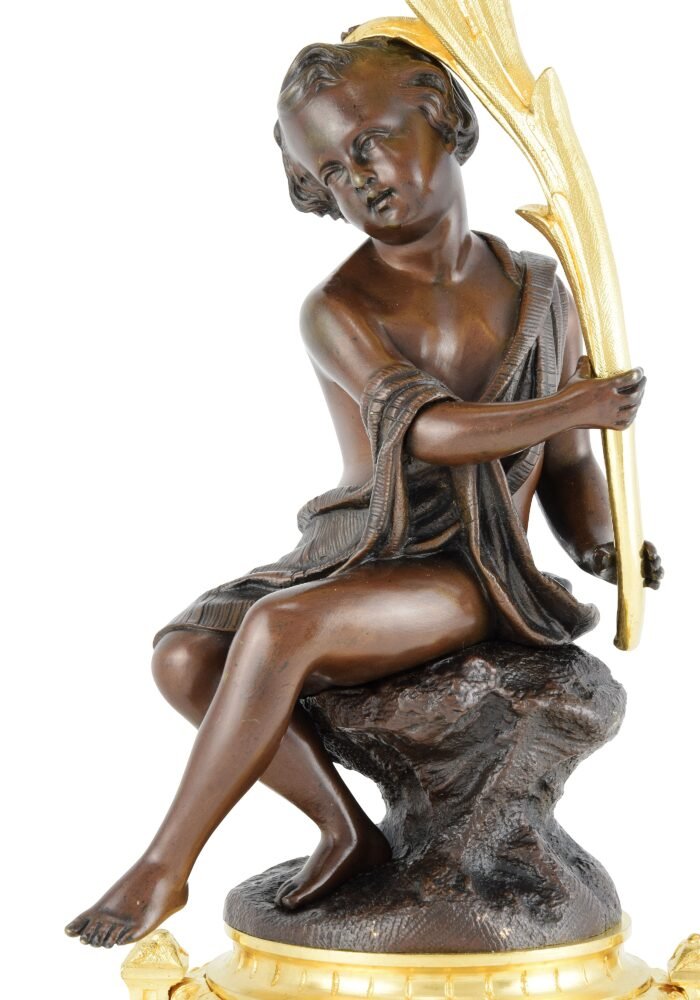
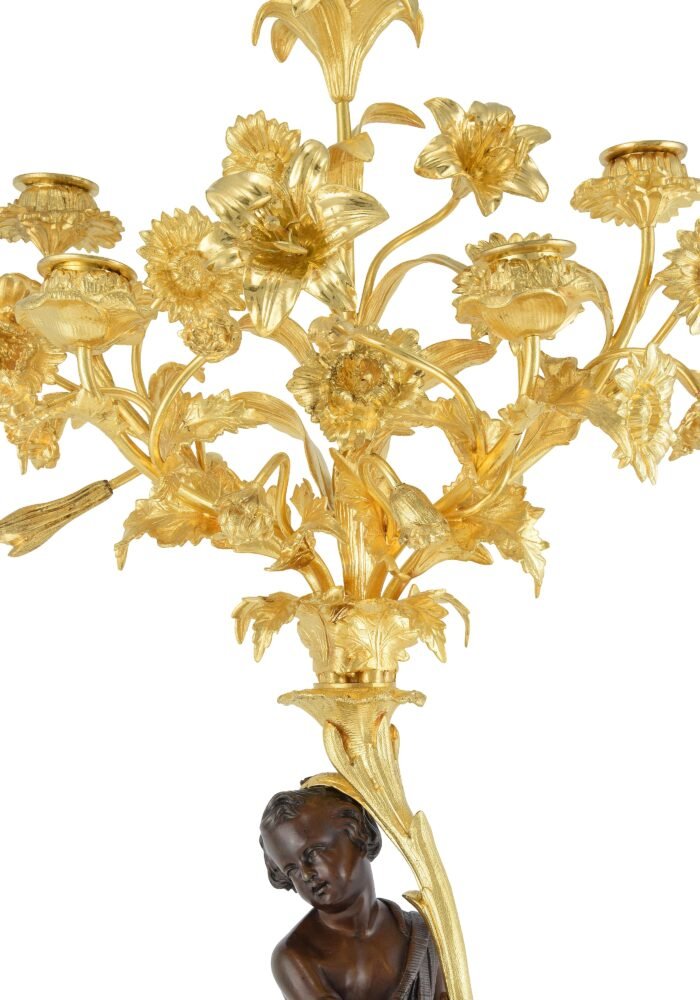
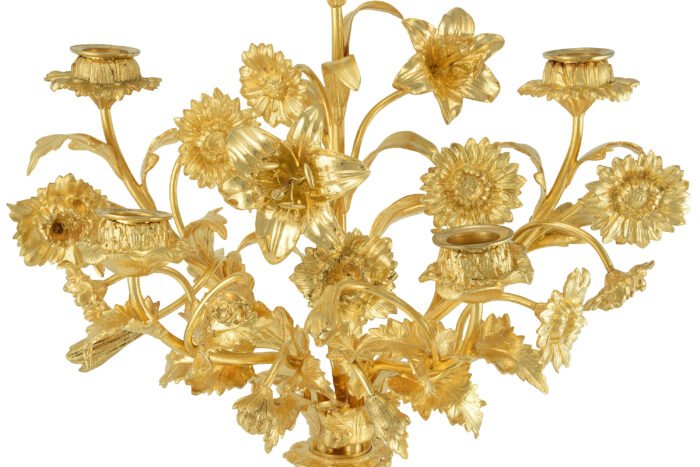
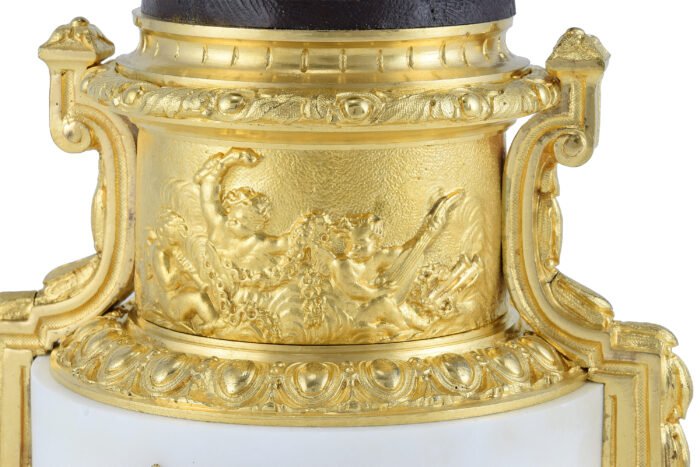
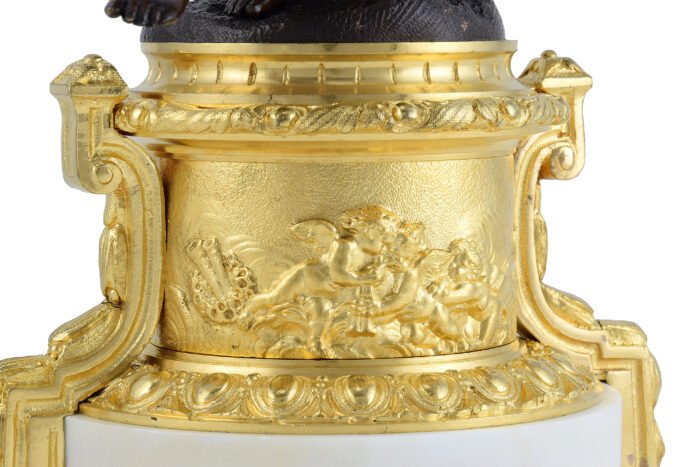
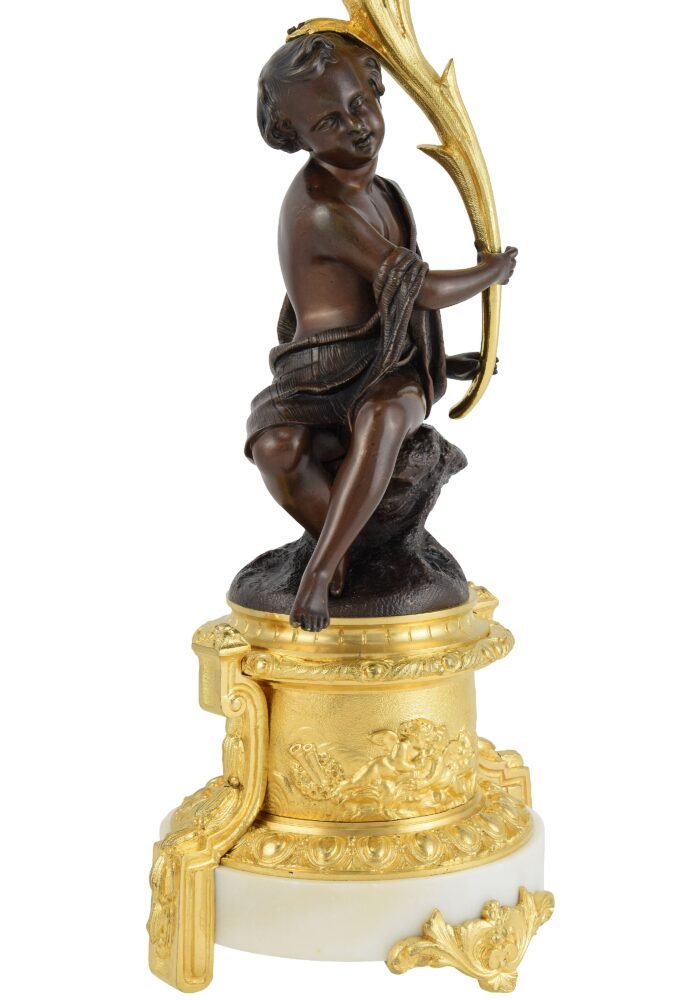
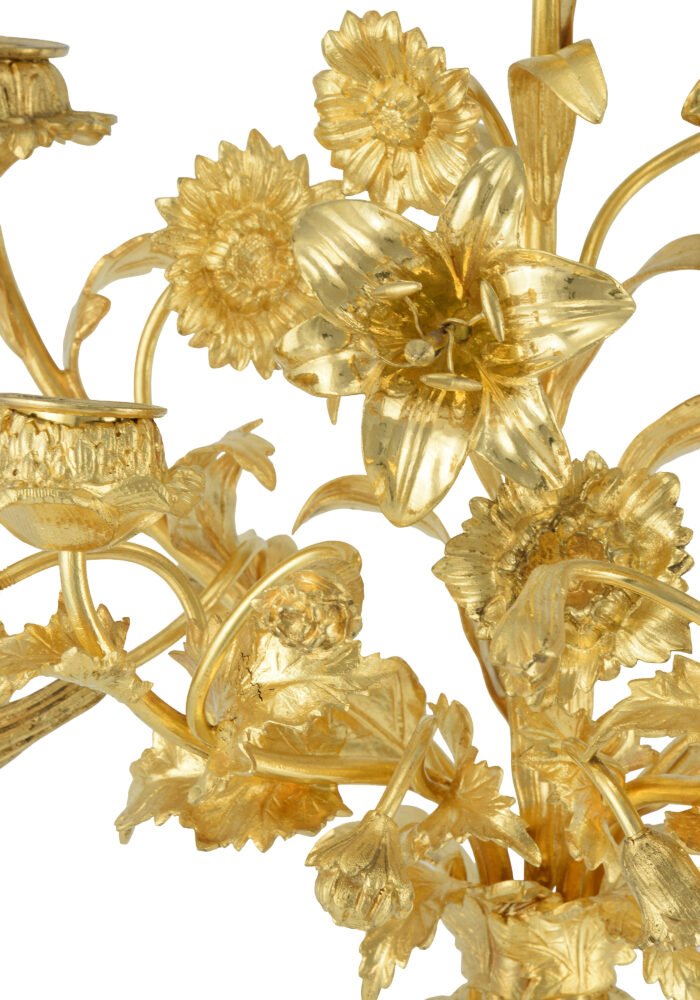
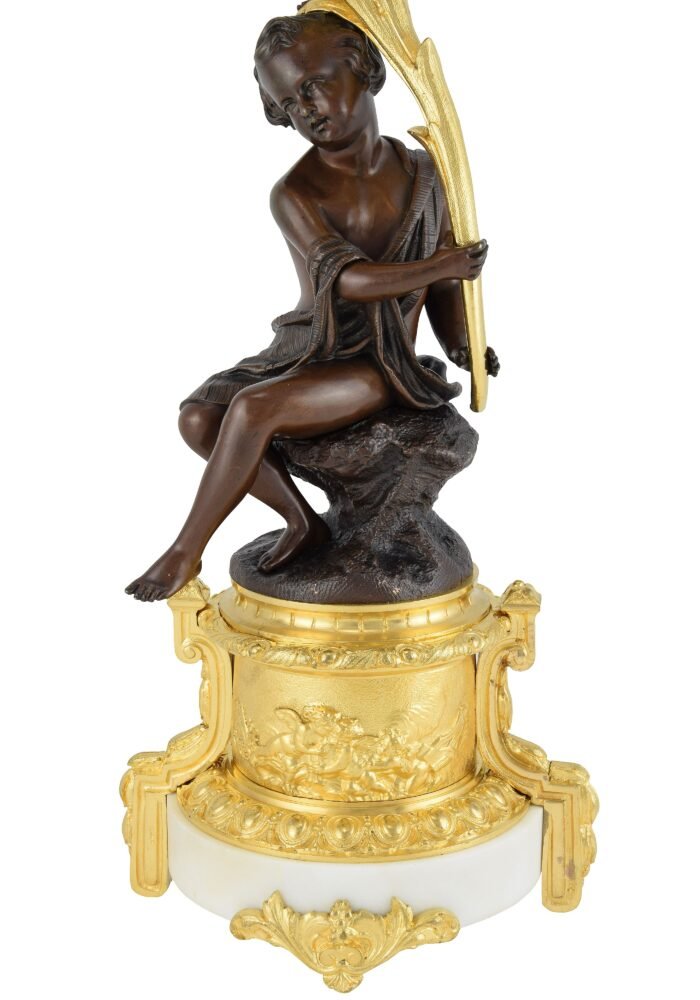
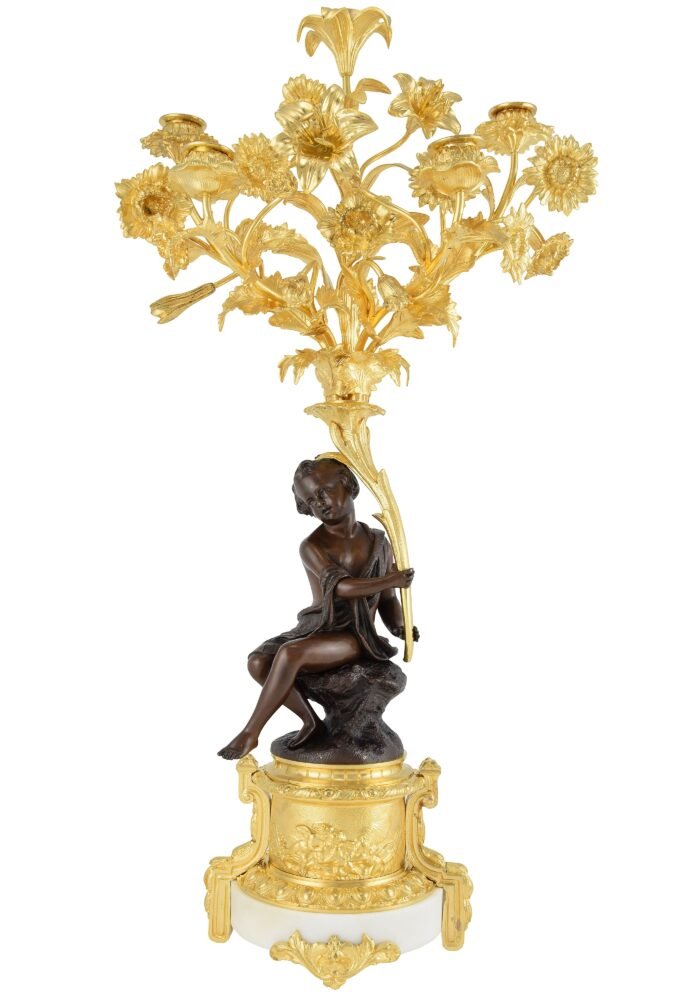
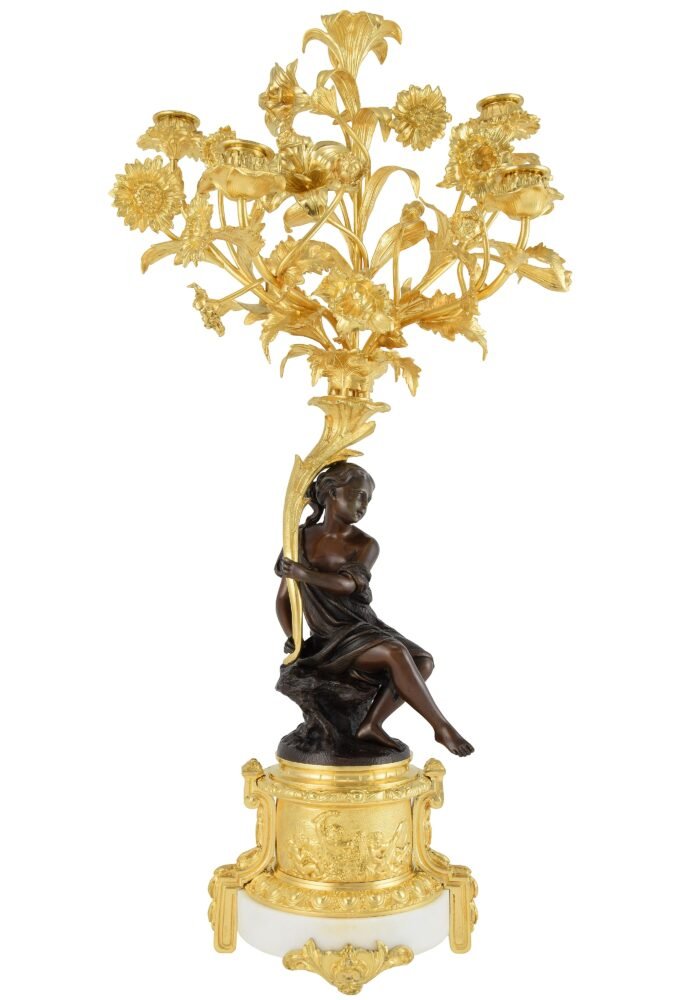
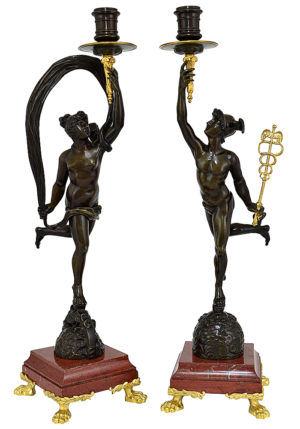
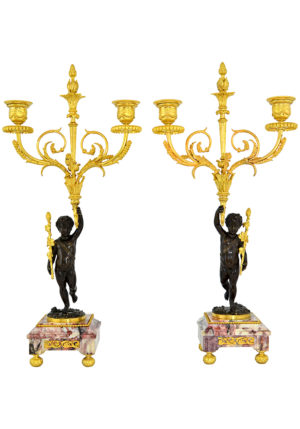
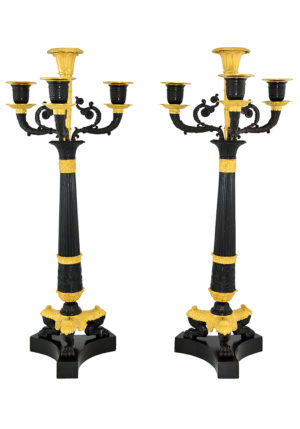
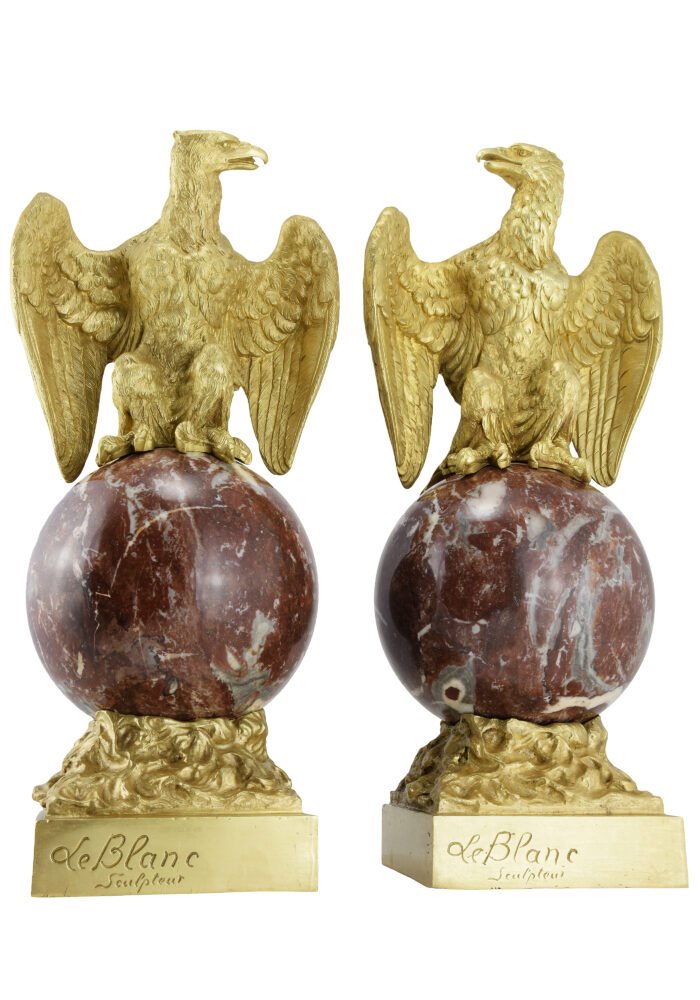
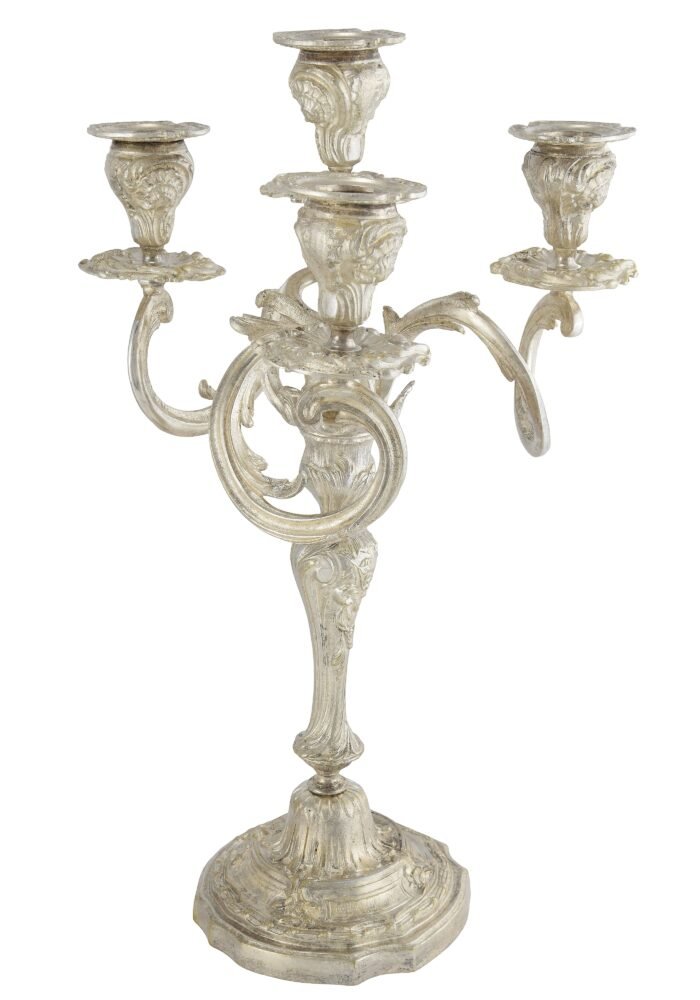
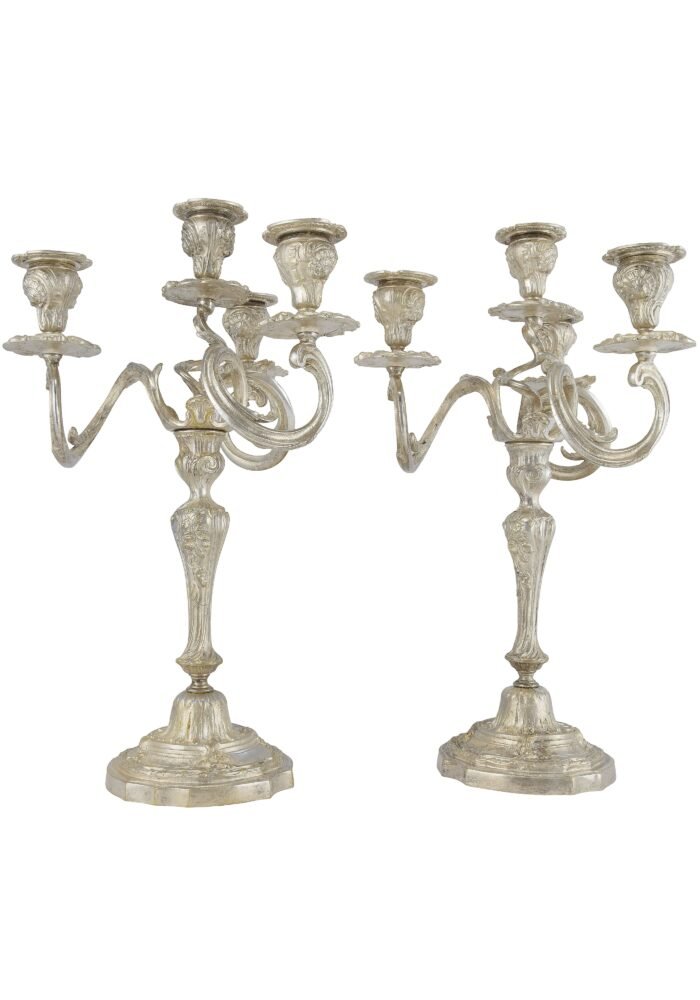
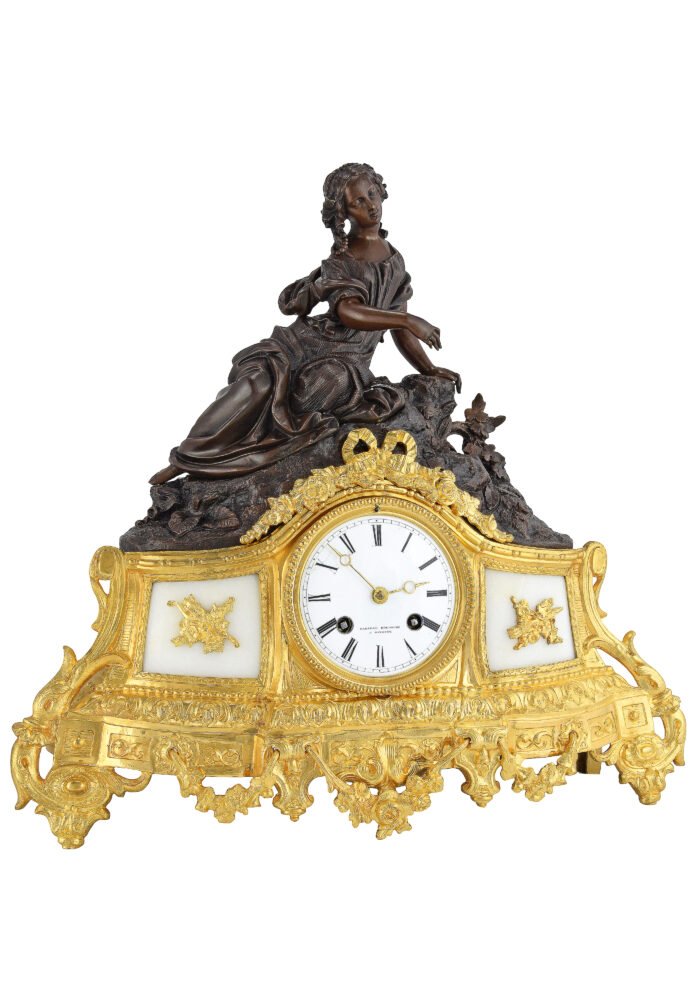
Pair of candelabra with floral bouquet 19th Century XIXe
| Materials: | Patinated bronze, Gilt bronze, Marble |
|---|---|
| Era: | Napoléon III 1852 - 1870 (Second Empire) |
| Period: | XIXe siècle |
| Style: | Louis XVI |
| Provenance: | French |
- Restored to original condition with original appearance.
- Perfect authenticity, without any modifications.
- Original gilding.
- Certificate of authenticity, invoice
Height: 64 cm
Width: 30 cm
Depth: 20 cm
Description
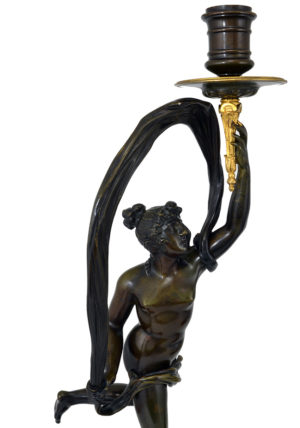
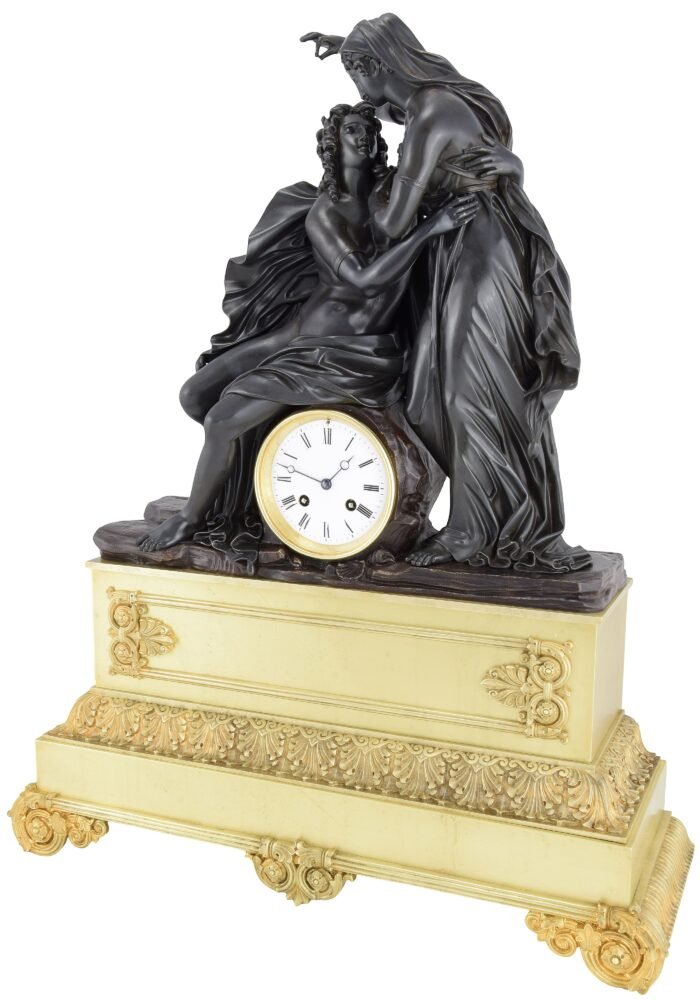
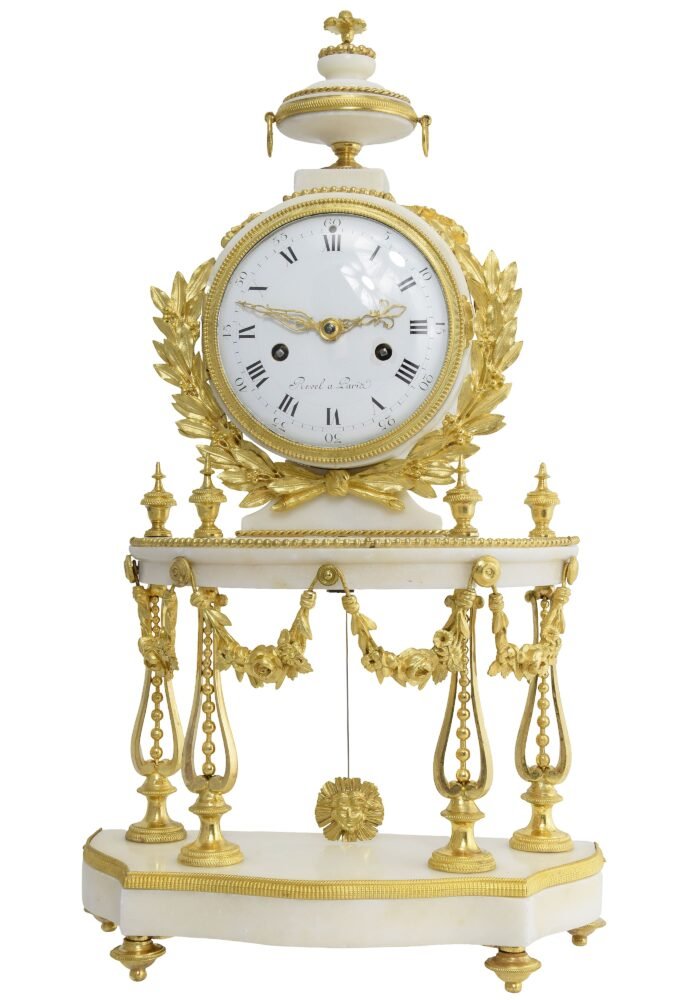
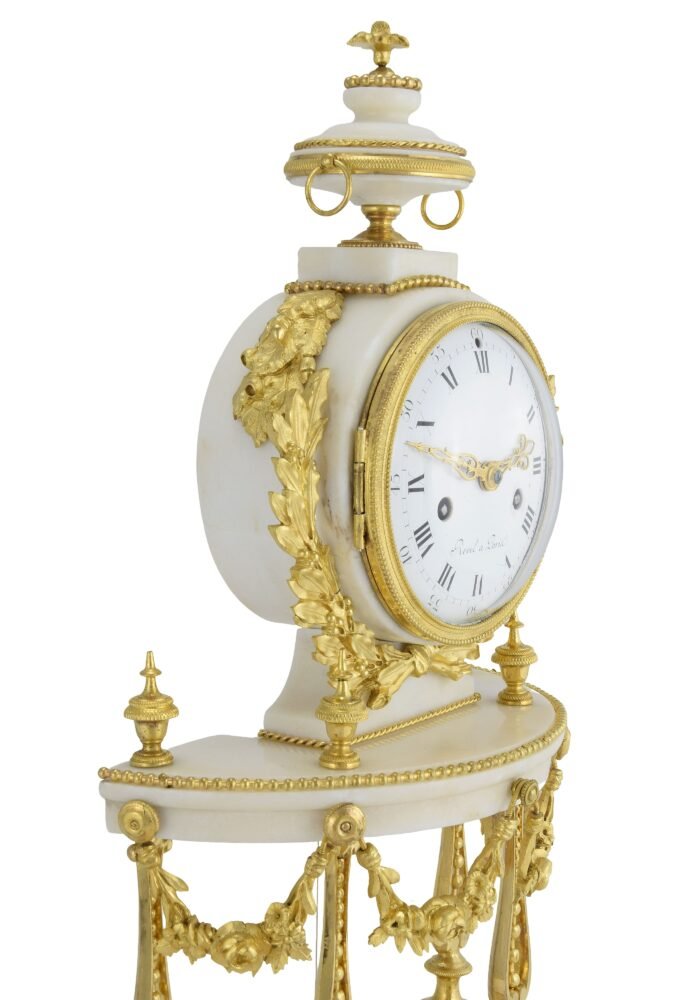
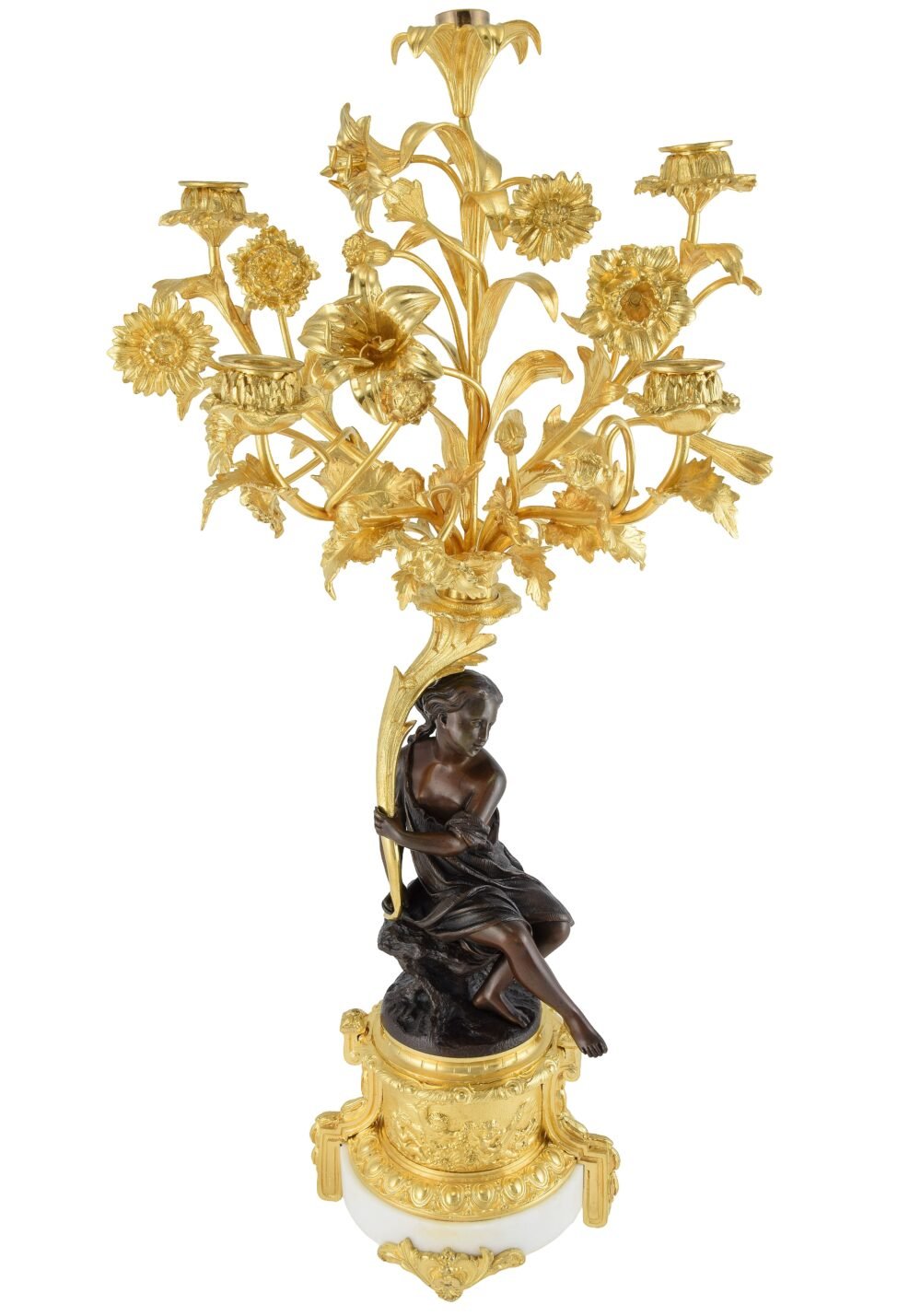
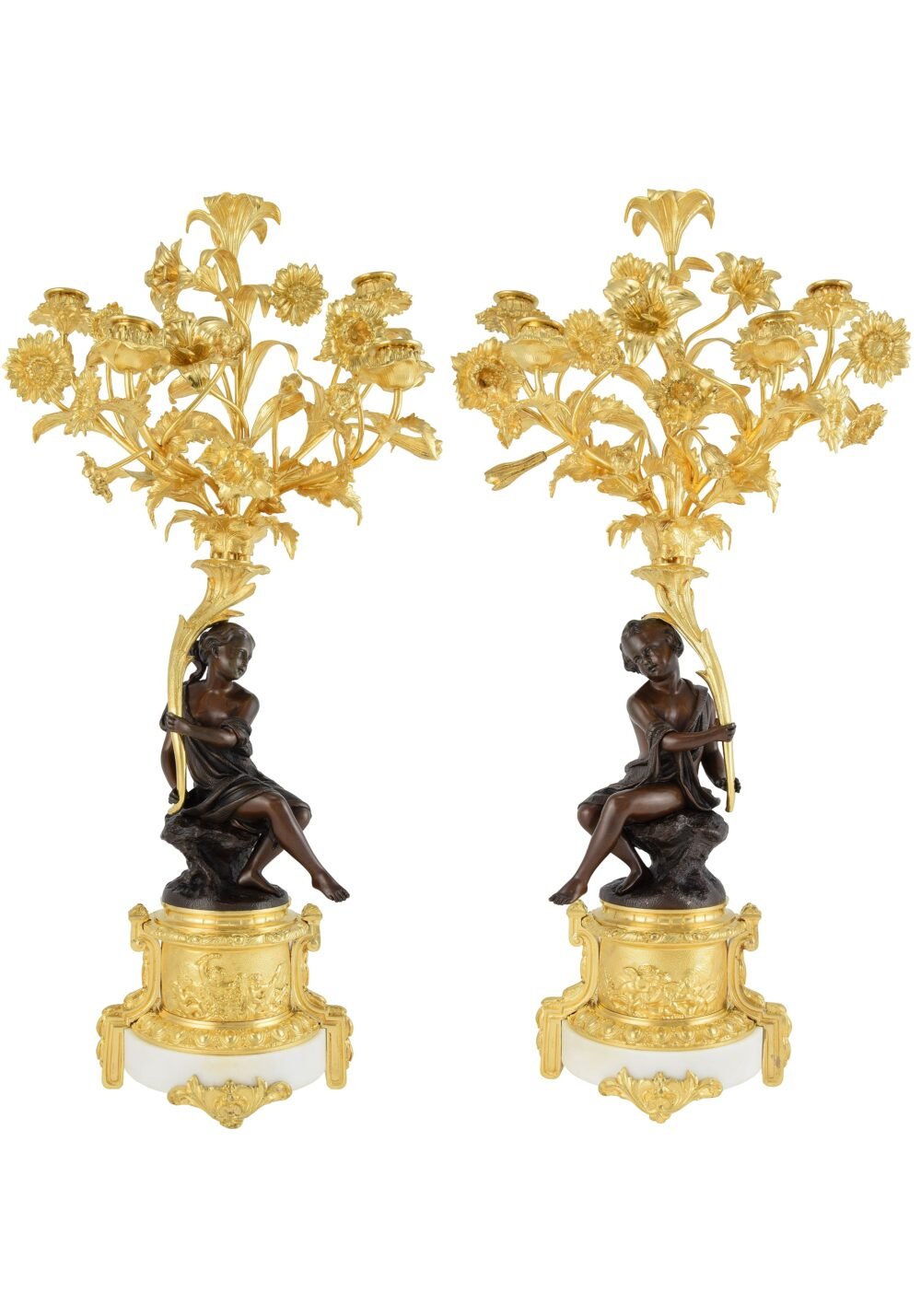
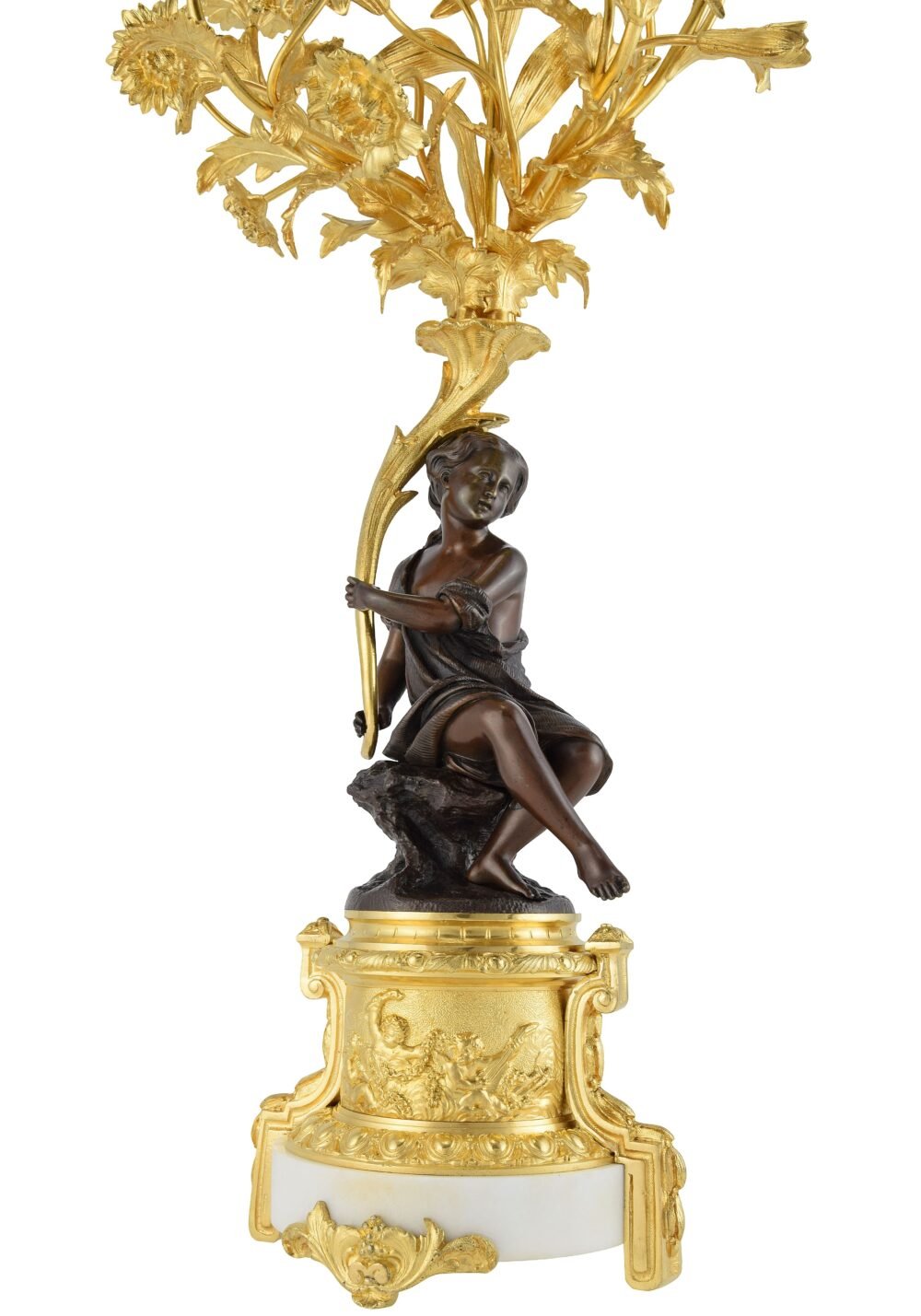
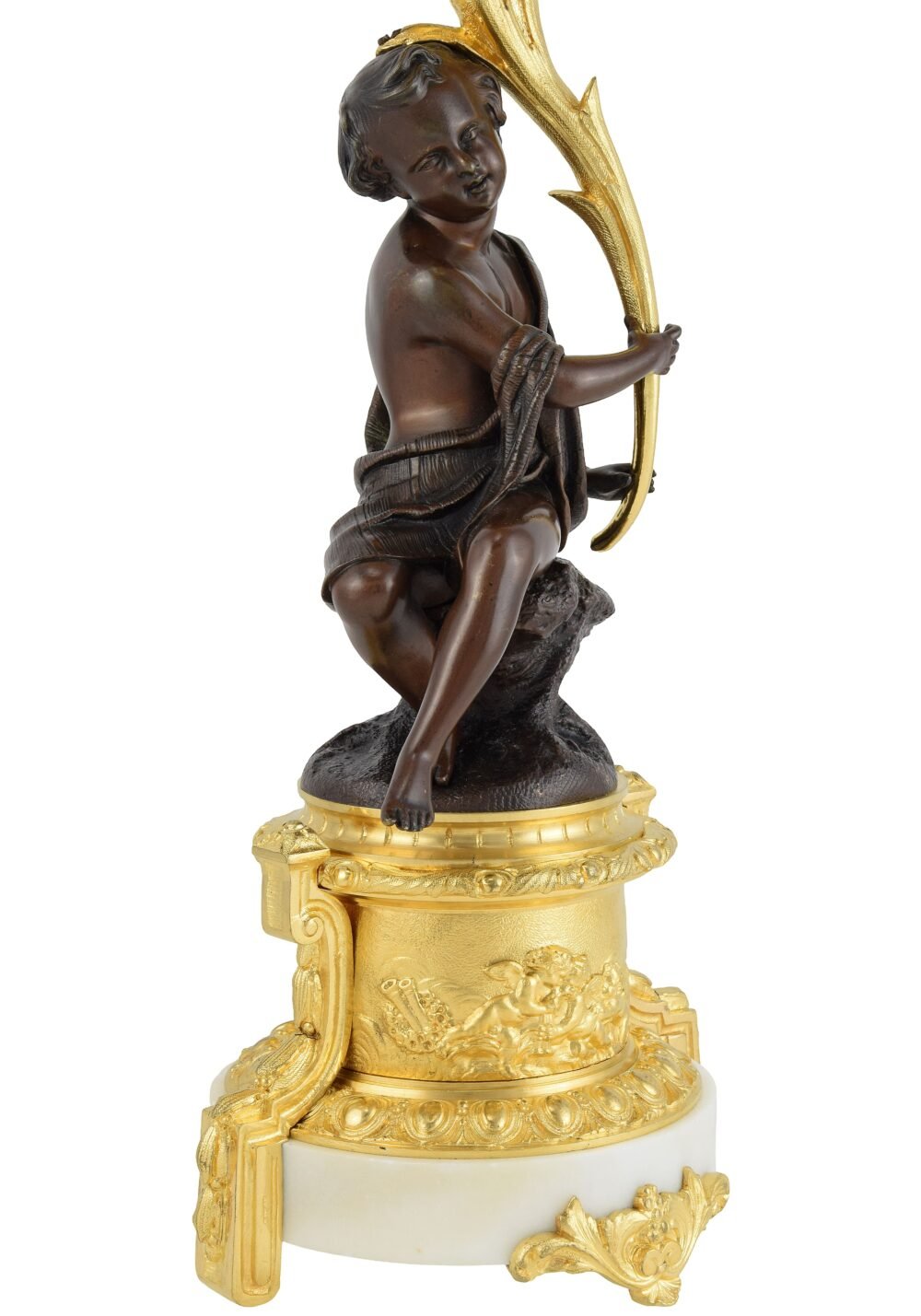
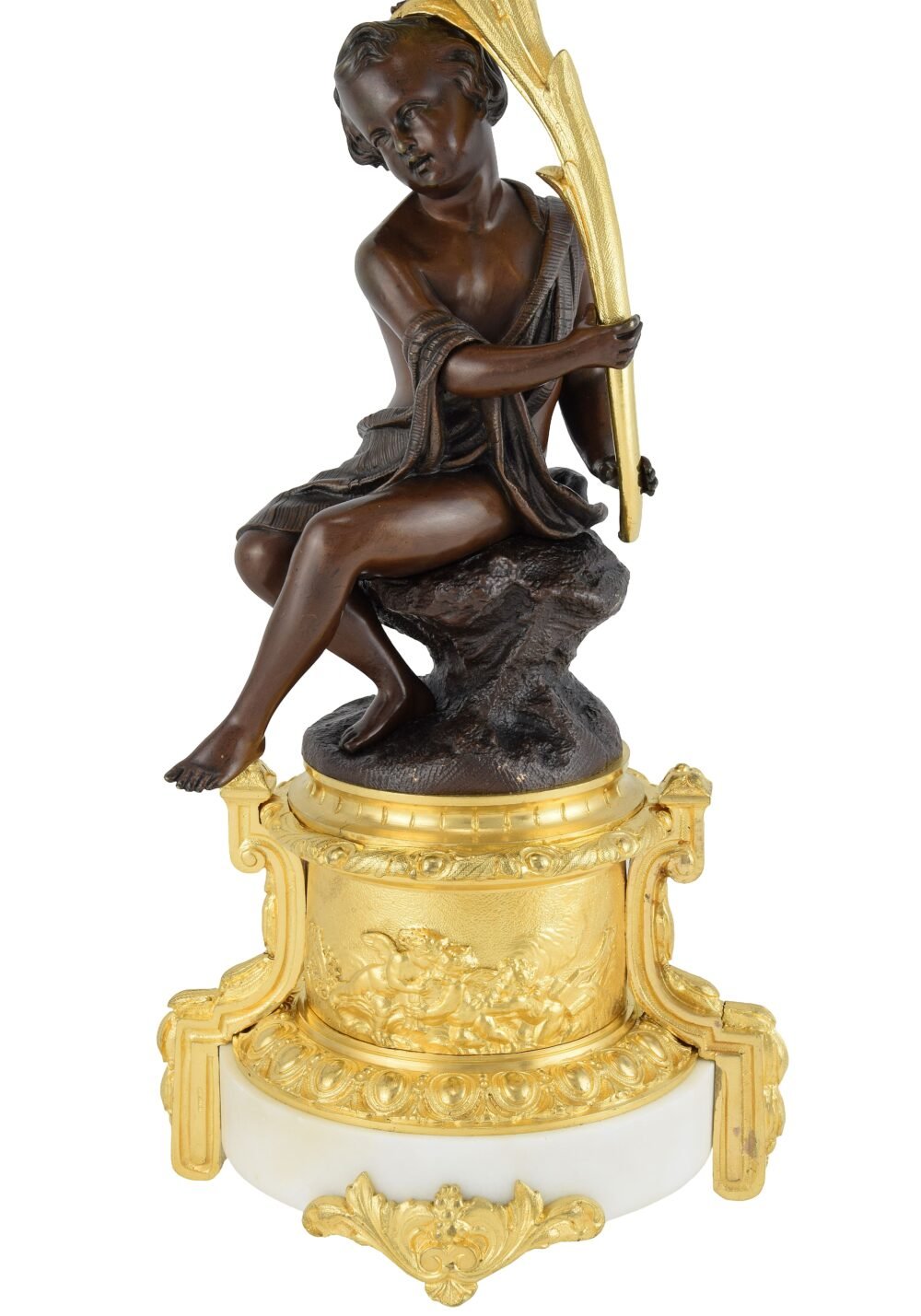
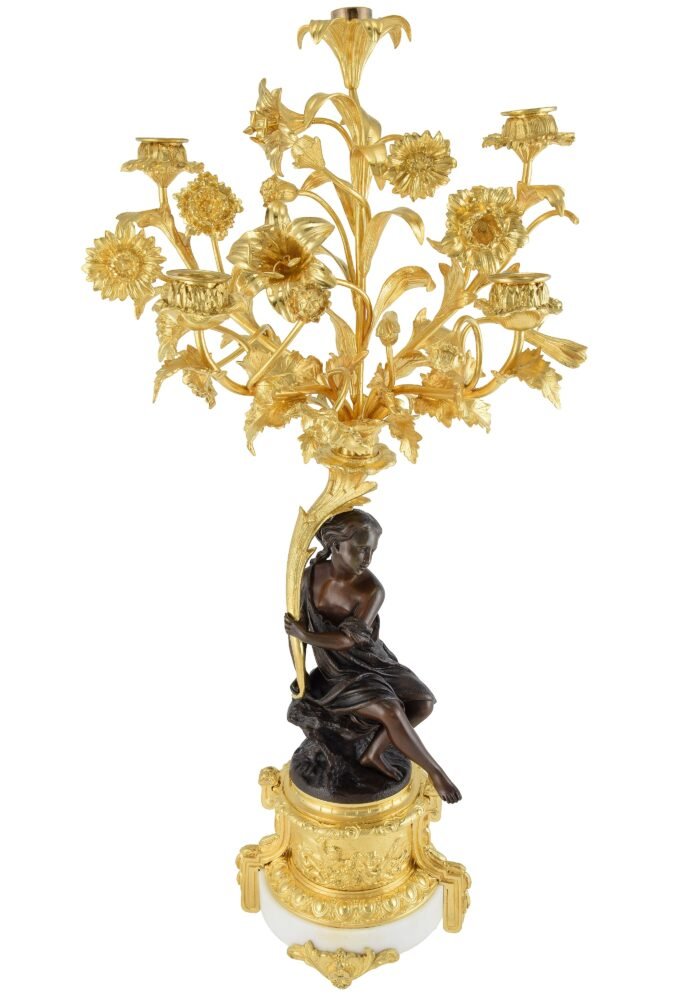
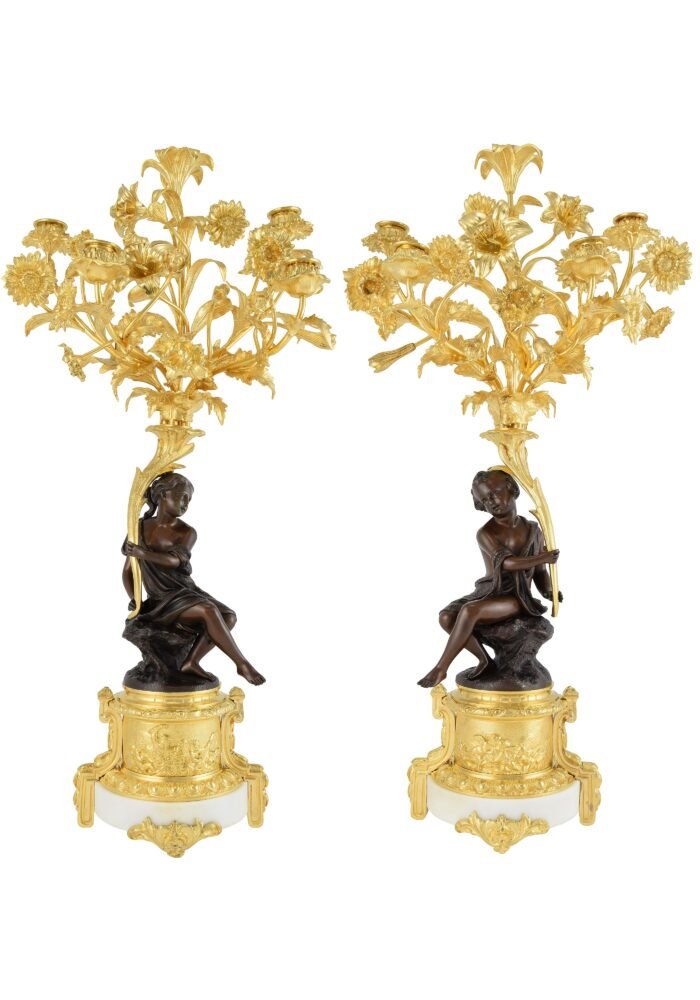
A pair of candelabra from the Napoleon III period, circa 1860. Designed as a pendant pair, intended to be displayed side by side, the two figures are intentionally oriented towards each other: one gazes to the right while the other looks to the left, creating a visual dialogue between the sculptures. Crafted in patinated bronze and gilt bronze, and resting on Carrara marble bases, these candelabras present a particularly rich sculptural composition where the architecture of the base, the delicacy of the decorative motifs, and the depiction of the figures combine in a harmonious and theatrical whole.
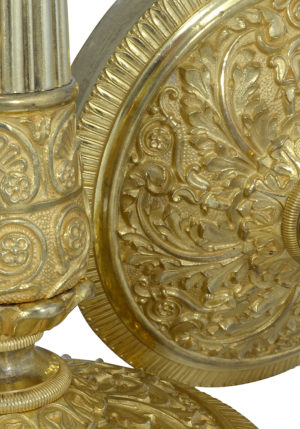
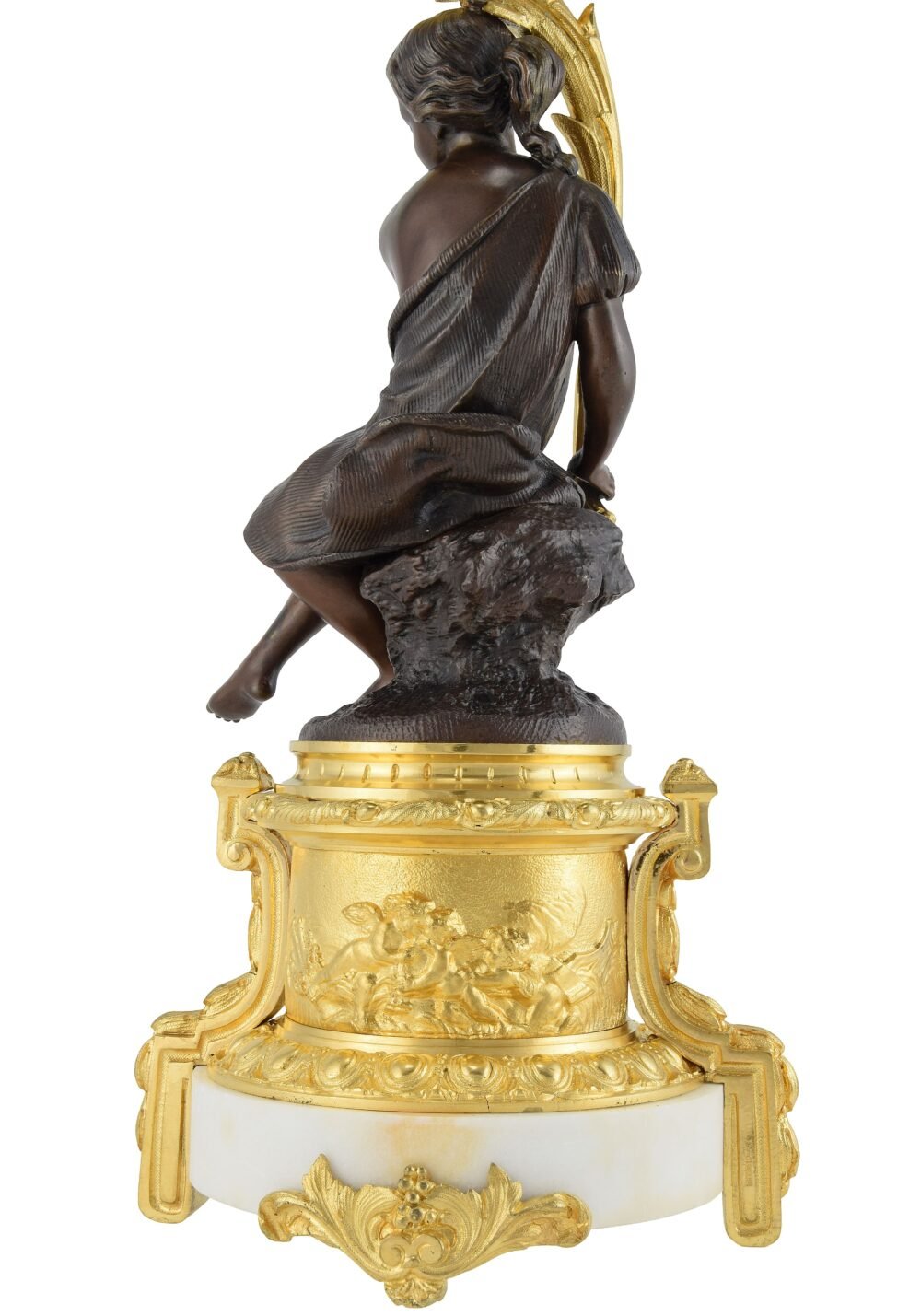
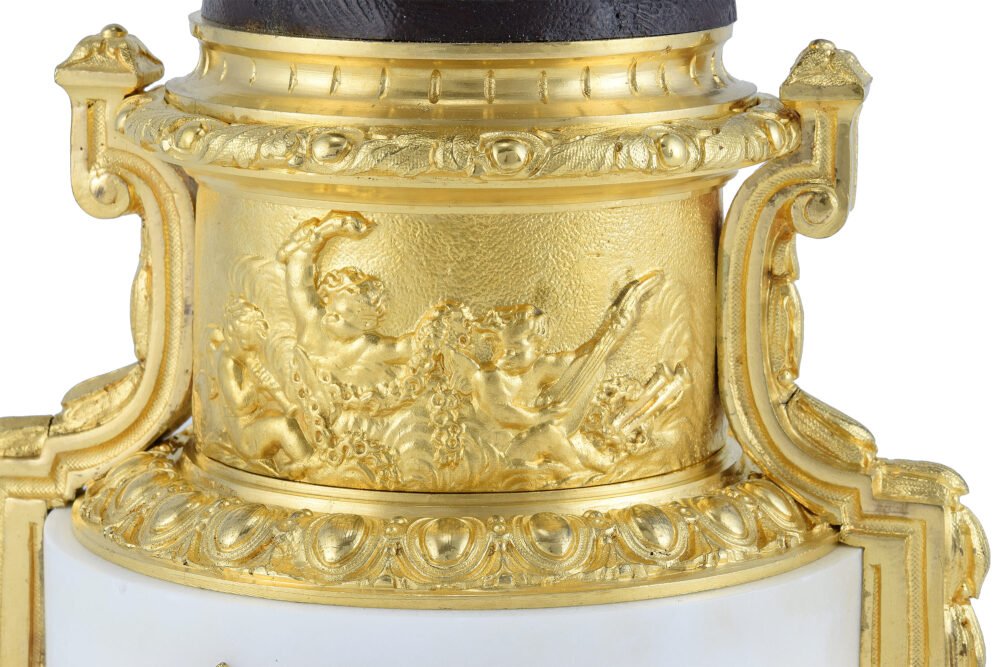
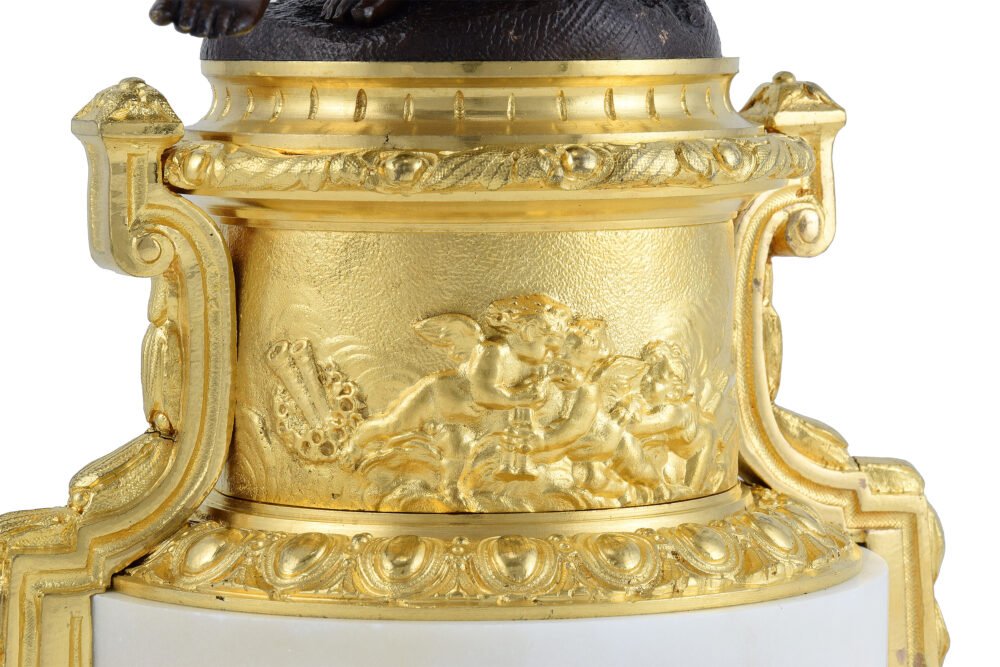
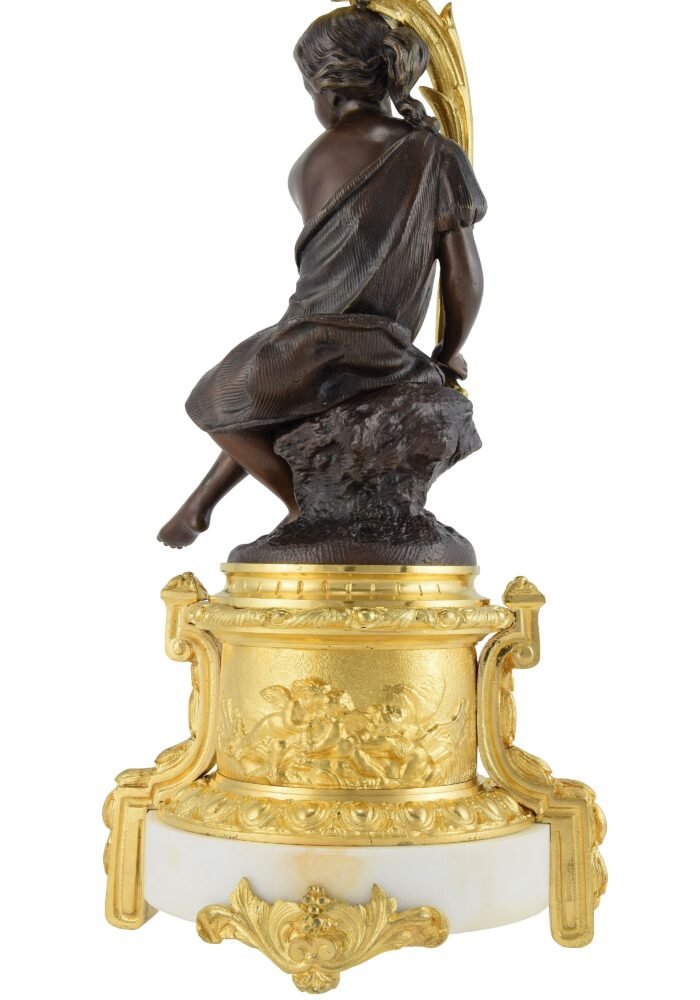
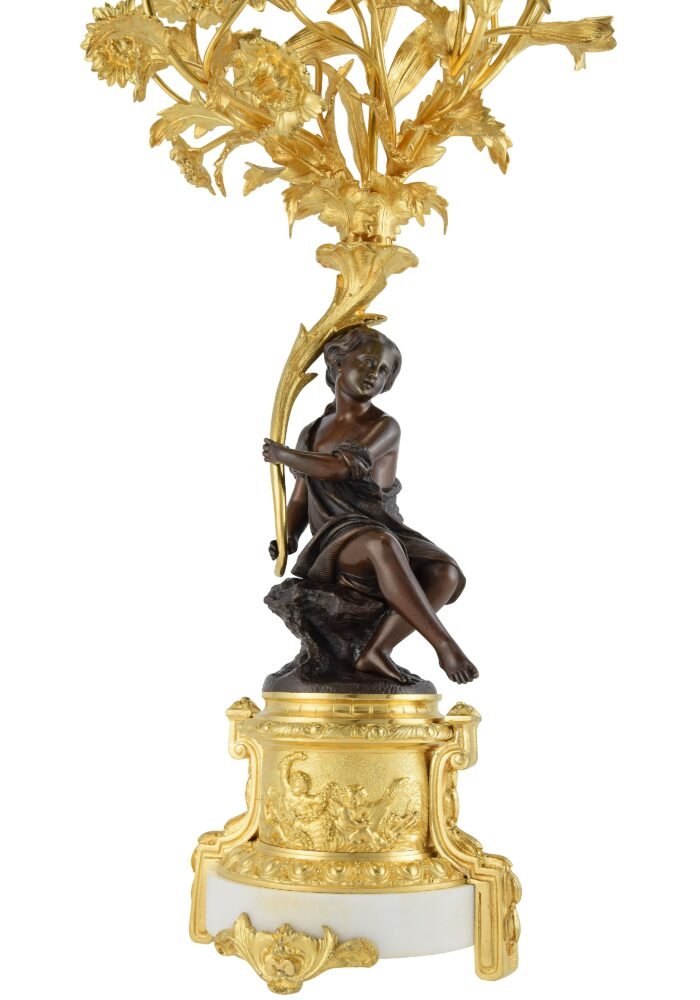
Each candelabra rises on a cylindrical plinth resting on a circular base of white Carrara marble, a noble material highly prized in the 19th century for its purity and its striking contrast with bronze. The gilt-bronze drum is lavishly decorated with bas-reliefs depicting putti playing various instruments amidst a backdrop of scrolling foliage. These scenes evoke the mythological and pastoral world so dear to the decorative arts of the Second Empire, while also recalling the Rococo and Neo-Louis XV influences frequently revisited under Napoleon III. The register is framed by friezes of finely chiseled acanthus leaves and egg-and-dart moldings, while scrolled lateral brackets visually structure the base.
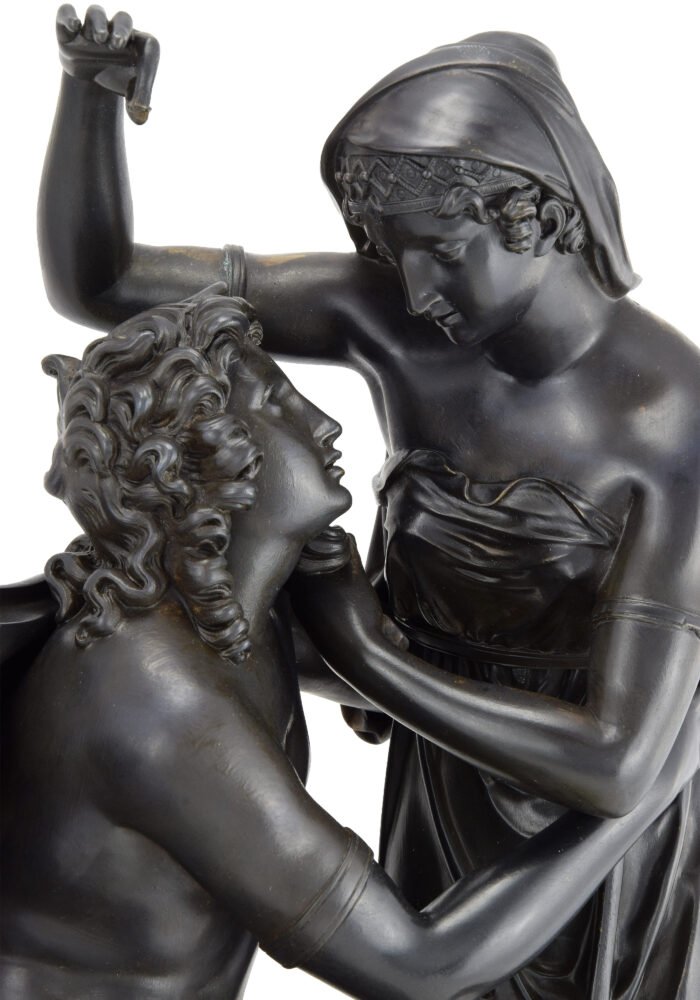
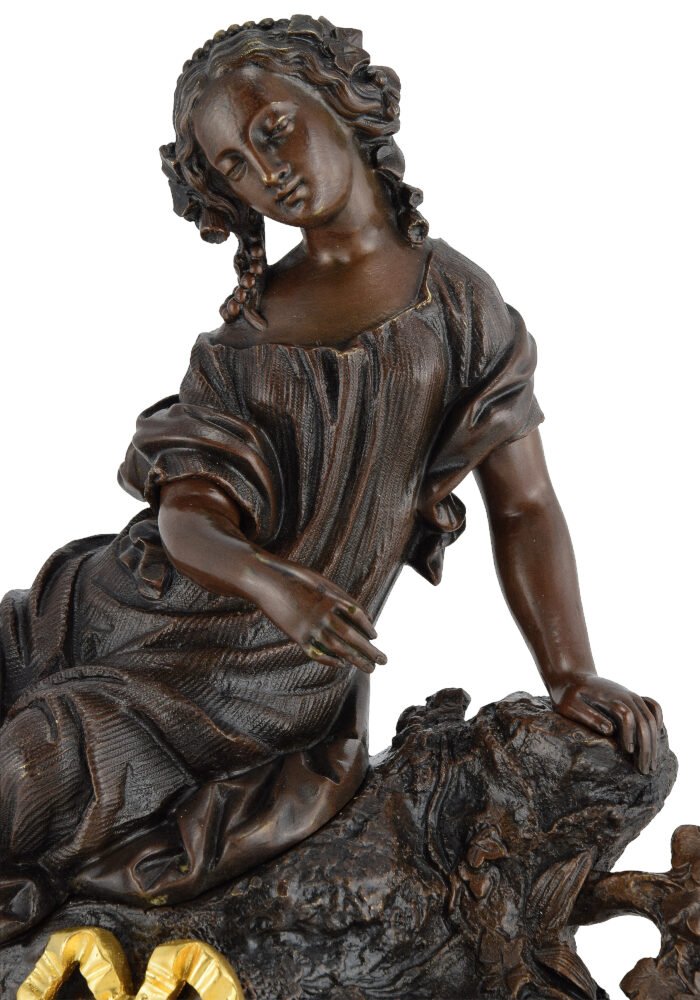
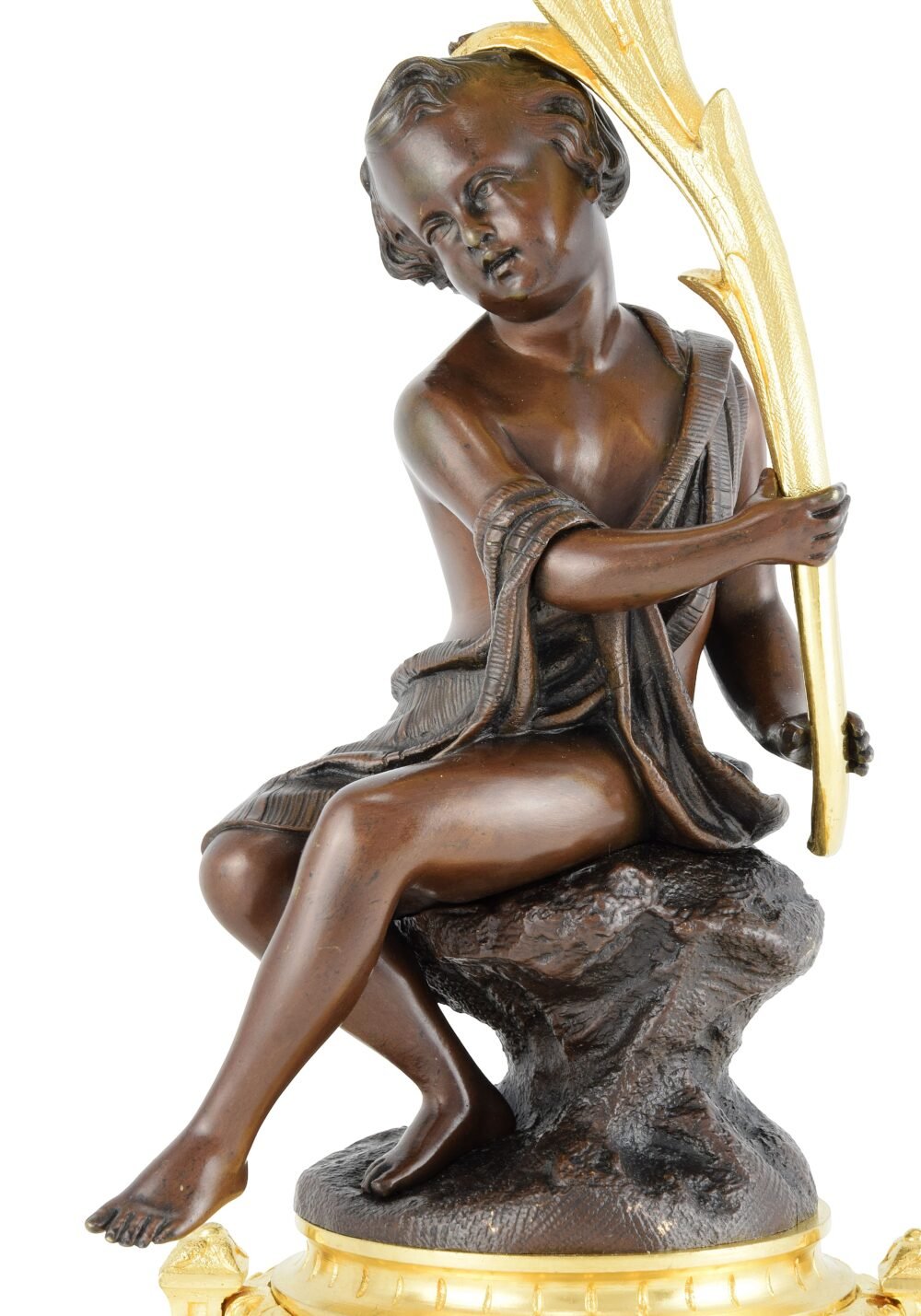
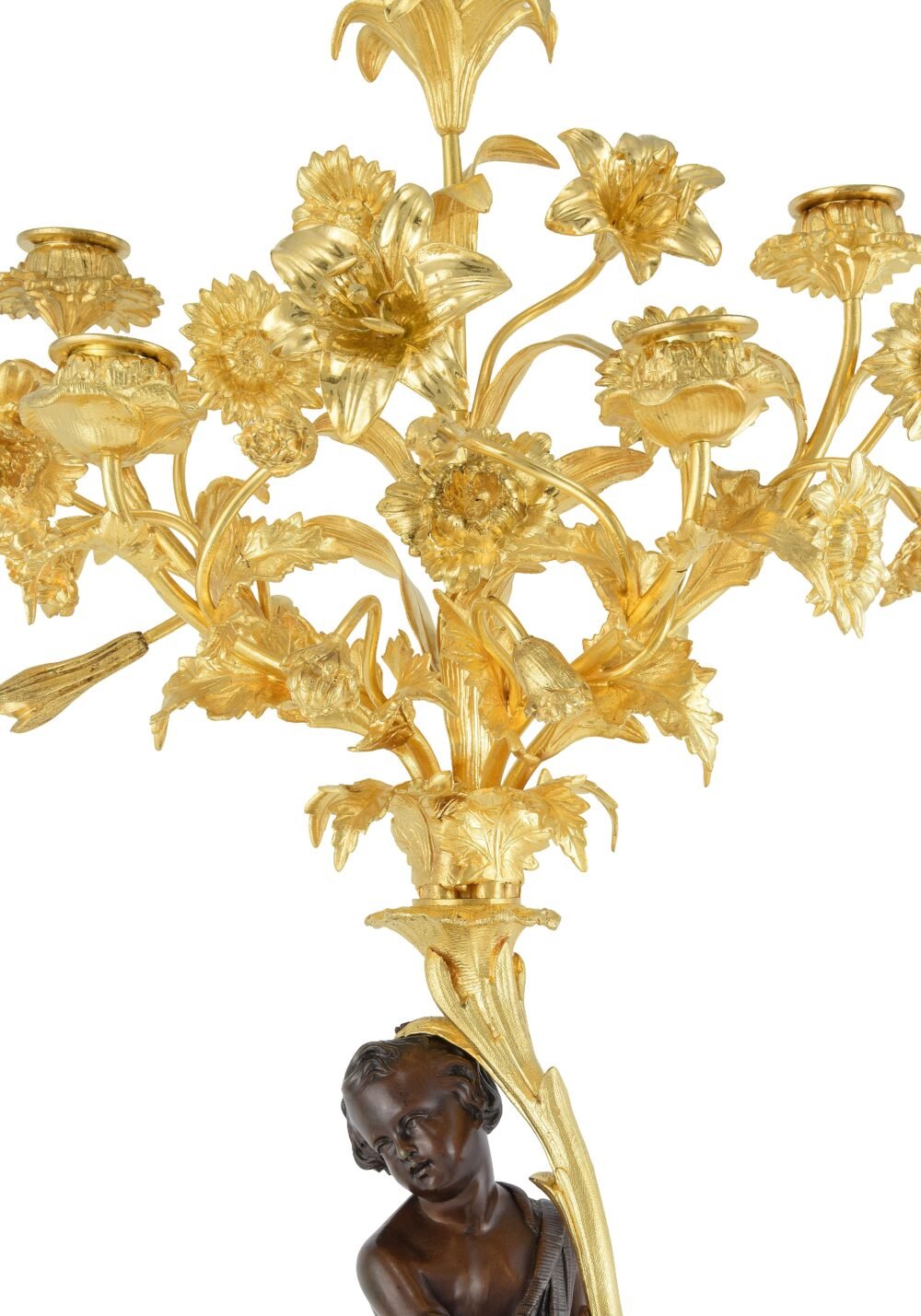
Above this architectural base sits the main figure: a patinated bronze youth, seated on a naturalistic rock. Draped in a light fabric with soft folds, the figure is depicted in a graceful and spontaneous pose. The posture is elegant and subtly dynamic: one leg extended, the other bent, the torso inclined in a gentle movement that animates the composition. The delicately polished modeling of the body contrasts with the rougher texture of the rock and the gleam of the gilded bronze rising behind it. In his arms, he holds a large, stylized gilded bronze stem that serves as a support for the light. His counterpart depicts a young woman in patinated bronze, also seated on a rock rendered in a naturalistic style. Draped in a light fabric that falls over her shoulder and reveals the fineness of the modeling, she adopts an attitude imbued with gentleness and elegance. Her posture, subtly different from that of her male counterpart, introduces a harmonious variation into the composition: her torso leans slightly while her arms embrace the gilded bronze stem that rises above her to form the luminous bouquet. One of her legs extends gracefully forward while the other bends naturally, accentuating the fluidity of her silhouette. Her face, with its delicate, youthful features, is animated by a calm and dreamy expression. By the opposing orientation of their gaze—one turned to the right, the other to the left—the two figures visually echo each other, affirming the design of the whole as a pair of pendants intended to be displayed side by side, in a perfectly balanced decorative dialogue.
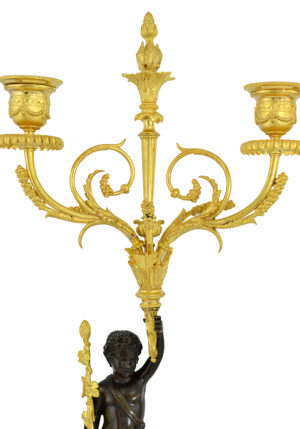
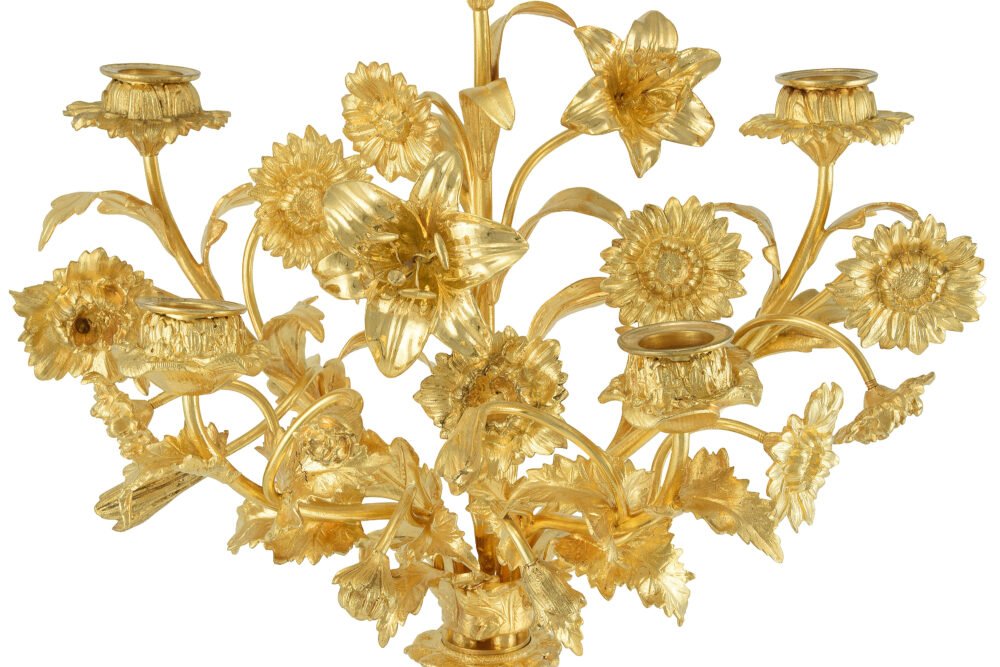
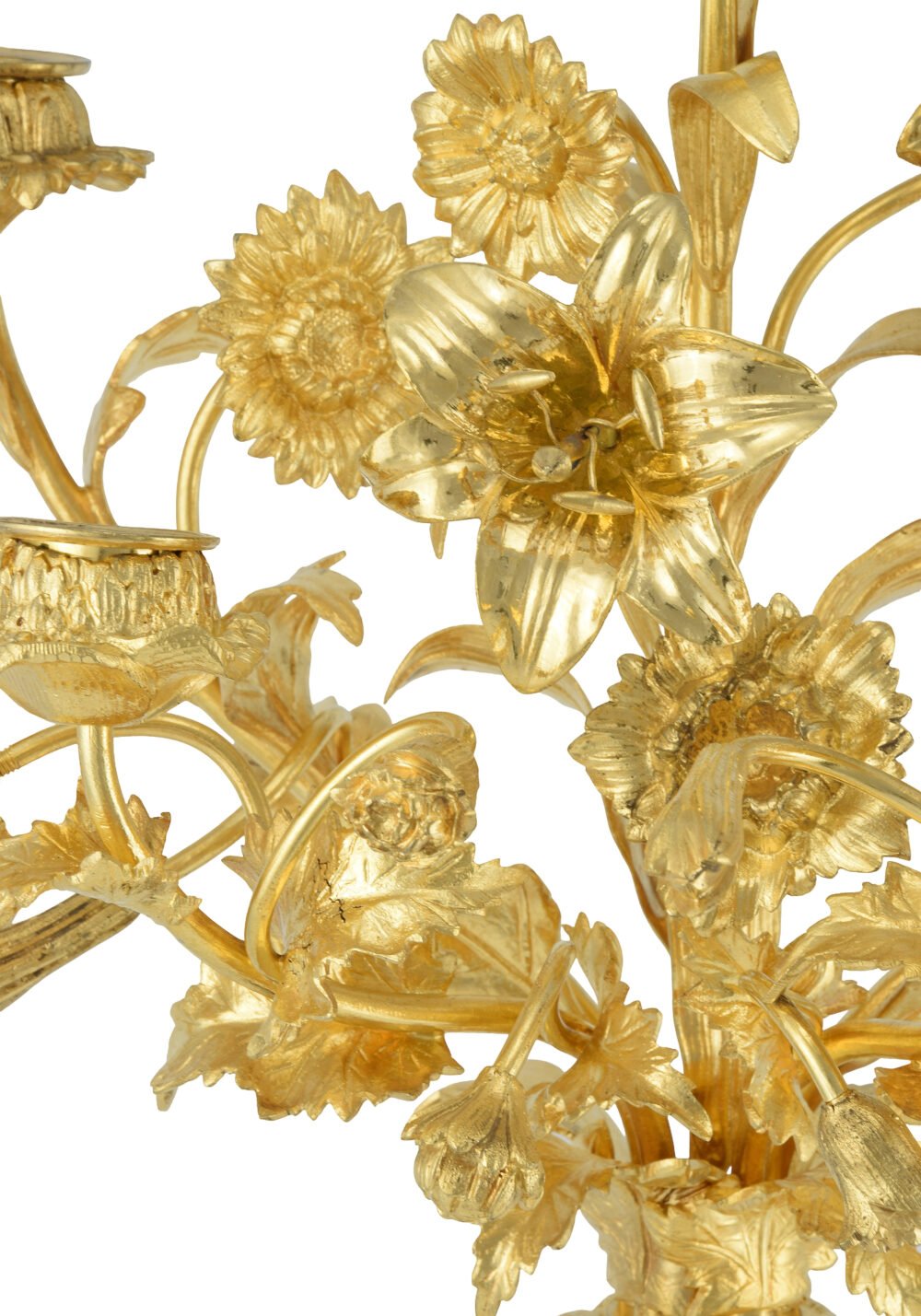
This stem unfolds upwards to form a spectacular bouquet of sculpted flowers, a veritable vegetal architecture characteristic of these candlesticks. The branches intertwine and branch out into a collection of naturalistic flowers—daisies, lilies, and flower buds—mingled with foliage, each finely crafted. The open corollas hold the candle holders, subtly integrated into the heart of the bouquet. This principle of a candlestick in the form of a bouquet reflects the 19th-century enthusiasm for decorative naturalism and for floral compositions transformed into ornamental objects.
The richness of their chiseling, the refined contrast between brown patina and brilliant gilding, as well as the elegance of their composition blending figurative sculpture and floral decoration, make these candelabra a remarkable example of the decorative luxury and craftsmanship of Parisian bronze workers during the Second Empire. Intended to enhance a prestigious interior, they perfectly illustrate the 19th-century taste for spectacular decorative works that are both sculptural and functional.
Questions
Easily pay for your purchases using our highly protected bank card system with SSL certificate and 256 bit encryption, ensuring confidentiality when any information is transferred. On a web browser, the OVH SSL certificate activates the HTTPS protocol and displays a padlock in the navigation bar. This shows that any transaction is encrypted and confidential, and that your website address has been authenticated.
Our items mainly stem from the inheritance of objects, preciously looked after over numerous generations. There is a stringent selection process for each object ensuring perfect authenticity and the optimal amount of gilding
We do not use the term “Restoration”, which implies a significant transformation or major repair that modifies an object’s authenticity or original appearance. Each object is completely dismantled, then thoroughly cleaned part by part; our cleaning technique restores shine without adversely affecting the gold. We then put the clock back together, returning all the various parts to their origin location, as well as all the nuts and screws. Subsequently, the item is inspected to ensure it is perfectly even, symmetrical, and smooth, etc.
The clock’s movement undergoes a complete overhaul; it is totally dismantled, cleaned and each individual part is polished. The duration of this procedure affects the shine: we prefer to obtain a brilliant shine, in keeping with the gilding of the object. To increase the strength and quality of the gears, we apply a very important procedure, known as bouchonnage, to correct for wear accumulated over years of operation, consisting in the placing cork of stoppers in any pivot holes that have become deformed by wear. After the clock has been completely reassembled, it is tested over a long period of time to ensure that the movement, as well as the hour and half-hour strikes, are operating correctly.
- Akzeptierte Kreditkarten: Visa, MasterCard, American Express, JCB, Discover und Diners Club.
- Bank transfer: You can also send us a copy of the bank transfer order to speed up the processing of your order.
Upon dispatch of your order, you will be sent a parcel tracking number by email.
Delivery anywhere in the world.
France: - Clocks: 3 days preparation work + 2 days for delivery - Total: 5 business days - Decorative objects: 1 days preparation work + 2 days for delivery - Total: 3 business days
Europe - Clocks: 3 days preparation work + 3 days for delivery - Total: 6 business days - Decorative objects: 1 day preparation work + 3 days for delivery - Total: 6 business days
Other countries - Clocks: 3 days preparation work + 3-8 days for delivery - Decorative objects: 1 days preparation work + 3-8 days for delivery
Easily pay for your purchases using our highly protected bank card system with SSL certificate and 256 bit encryption, ensuring confidentiality when any information is transferred. On a web browser, the OVH SSL certificate activates the HTTPS protocol and displays a padlock in the navigation bar. This shows that any transaction is encrypted and confidential, and that your website address has been authenticated.
You will receive—by email and a paper version—an explanatory document containing all the necessary instructions and recommendations for operating your clock. We also provide assistance over the phone to guide you through the start-up procedure. Of course, we will continue to be available—by both telephone and email—to answer any questions you may have. For calls in German or English, please make an appointment first via email, providing us with your telephone number, and the date and time you wish to contact us. Contact.
- Click on the button “add to basket” to add an object. - Once you have finished your order, click on “view contents of basket” located at the bottom of the screen or on small the “shopping trolley” icon at the top right. - click “Complete my order” or “order” - Fill in the invoicing address details, you also have the possibility to send the parcel to a different address. - Select the payment method - To confirm your order, click “order now”
By email, you will be sent: - confirmation of your order & payment - Parcel tracking information
Every purchase comes with a certificate of authenticity and an invoice
High quality certificate of authenticity printed on photo paper with text and photos providing all the information concerning your object. Detailed invoice indicating the price paid for the object.